On avenue Montaigne, where Parisian luxury is inseparable from fashion, Hôtel Plaza Athénée holds one of the capital’s most recognisable addresses. Verified sources place the Dorchester Collection hotel at 25 avenue Montaigne in the 8th arrondissement and trace its story back to an opening on 20 April 1913. What emerges from the record is not simply a famous grand hotel, but a property whose identity rests on documented heritage, a longstanding dialogue with couture, and a gastronomic story entering a clearly signposted new phase.
A couture address with documentary weight
Hôtel Plaza Athénée stands on avenue Montaigne, a Paris thoroughfare whose name is closely tied to haute couture and luxury retail. The hotel is identified by Dorchester Collection as one of its Paris properties, and Comité Colbert, the association of French luxury houses and cultural institutions, also profiles the hotel within that broader landscape of French savoir-faire. This dual framing matters. It allows the address to be understood not only as a piece of hotel branding, but as part of a larger ecosystem in which fashion, design and hospitality have long been intertwined.
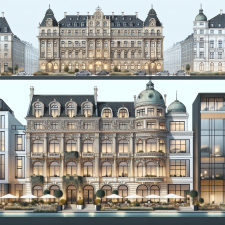
The property’s visual identity is widely associated with its avenue-facing façade, red awnings and flower boxes, elements that appear in official material and have become part of its public image. Those features can be described as part of its established presentation, though they should not be mistaken for evidence of the entire guest experience. Still, they help explain why the hotel remains so photographically legible within Paris: it does not merely occupy avenue Montaigne, it performs its address with unusual consistency.
For an editorial portrait, that distinction is useful. Hôtel Plaza Athénée is not simply a luxury hotel near fashion houses; verified institutional and operator sources alike position it as a hotel whose identity has been consciously shaped by the culture of couture. The result is a property whose fame rests as much on urban symbolism as on accommodation alone.
A 1913 opening and a heritage status defined with precision
Dorchester Collection states that Hôtel Plaza Athénée opened on 20 April 1913 and credits architect Charles Lefebvre with the original design. France’s Ministry of Culture, in its Mérimée record for the building, supports that early-20th-century chronology and likewise names Charles Lefebvre, while documenting construction phases that extended through the 1910s. These are strong historical anchors, allowing the hotel to be placed securely within the architectural and social history of modern Paris rather than in a haze of inherited legend.
The Ministry of Culture record is particularly important because it clarifies the hotel’s heritage standing with more precision than luxury publicity usually offers. The property is not simply to be described as wholly listed in a blanket sense. Instead, specified portions are protected, including the façade on avenue Montaigne, the roof, the hall, the grande galerie, the dining room and the Salon Montaigne. For an article concerned with style and legacy, that narrower definition is more interesting than a vague claim, because it shows exactly where historical significance has been formally recognised.
This nuance deepens the hotel’s appeal. Hôtel Plaza Athénée belongs to a category of Paris addresses where glamour is sustained by real architectural continuity. The effect is not only visual theatre, but continuity of fabric: public rooms and ceremonial spaces whose importance has been documented beyond the language of promotion.
Rooms and suites: scale, discretion and caution around numbers
Current Dorchester Collection material presents Hôtel Plaza Athénée as offering 154 rooms and 54 suites. That figure comes from operator sources and is the most current room breakdown available in the material consulted. At the same time, older or lagging third-party pages have published different numbers, so the inventory is best treated as the hotel’s present stated configuration rather than an immutable fact of record.
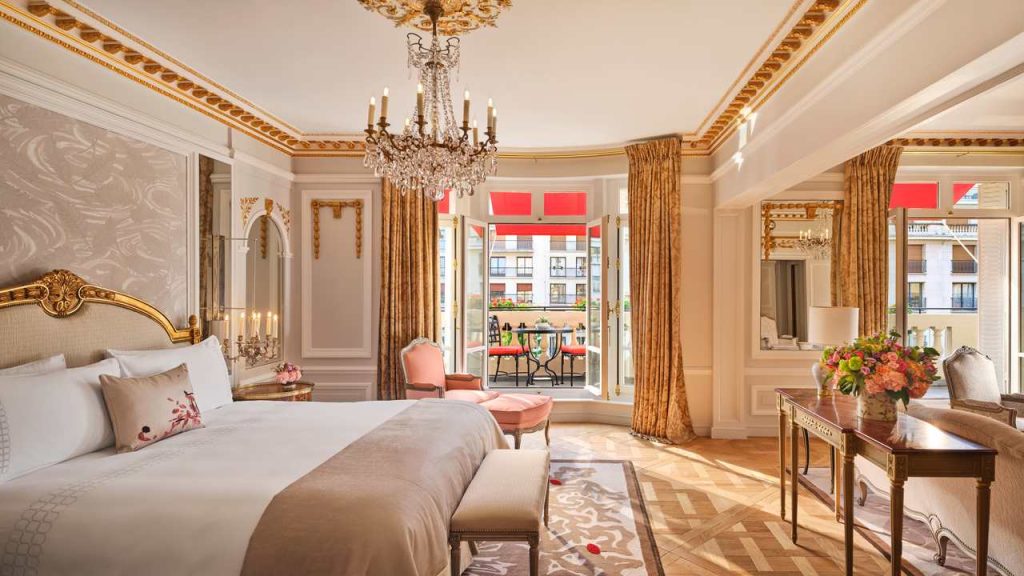
That caution does not diminish the broader point. Even without leaning too heavily on room counts, the hotel clearly operates at a substantial scale within the top tier of Paris hospitality. Official material emphasises a spectrum of rooms and suites rather than a narrow boutique format, and it presents some categories as benefiting from notable Paris views. Without tying any supplied image to an unverified room type, the documentation supports a portrait of accommodation shaped by classic Parisian luxury and couture-adjacent polish.
Editorially, restraint is preferable here. It is possible to say that the hotel’s accommodation offer is extensive and that the suites form an important part of its identity. It would be less responsible to generalise from a single press image or imply that every room shares the same outlook, layout or decorative emphasis. What is verified is the scale of the offer and the hotel’s intention to place refinement at its centre.
Le Relais Plaza and La Grande Table: two distinct dining narratives
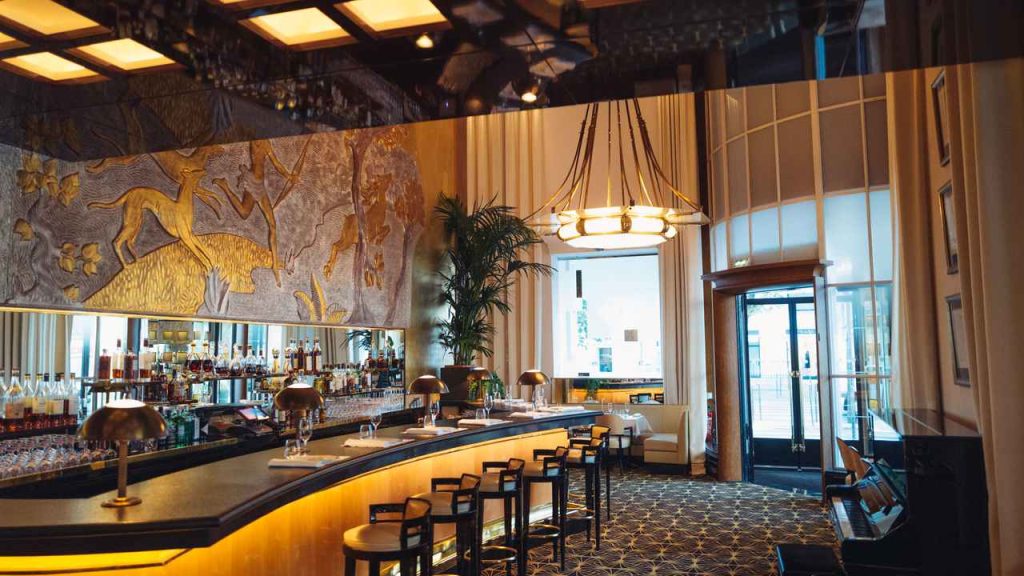
Any serious account of Hôtel Plaza Athénée in 2026 must distinguish clearly between its historic restaurant identity and its latest gastronomic development. Le Relais Plaza, according to Dorchester Collection, dates to 1936 and is associated with an Art Deco dining room. The current official restaurant page names Victoria Boller as the chef leading Le Relais Plaza, making it a distinct culinary address within the hotel rather than a generic shorthand for all dining under its roof.
Alongside that continuity, Dorchester Collection announced a new chapter on 14 September 2026 for the hotel’s gastronomic restaurant under the name La Grande Table du Plaza Athénée. The group’s media release attributes the project to chefs Jocelyn Herland and Anthony Di Prospero, with pastry chef Angelo Musa also named as part of the team. This is one of the clearest current developments in the hotel’s story, and it deserves to be treated as exactly that: a documented transition, not a vague refresh.
The distinction is essential because the hotel’s culinary identity is now layered rather than singular. Le Relais Plaza carries historical resonance and a precisely described design character. La Grande Table du Plaza Athénée signals a newly declared gastronomic direction. Both belong to the property, but they are not interchangeable in history, room, authorship or mood.
Beyond the table: bar, spa and the broader composition
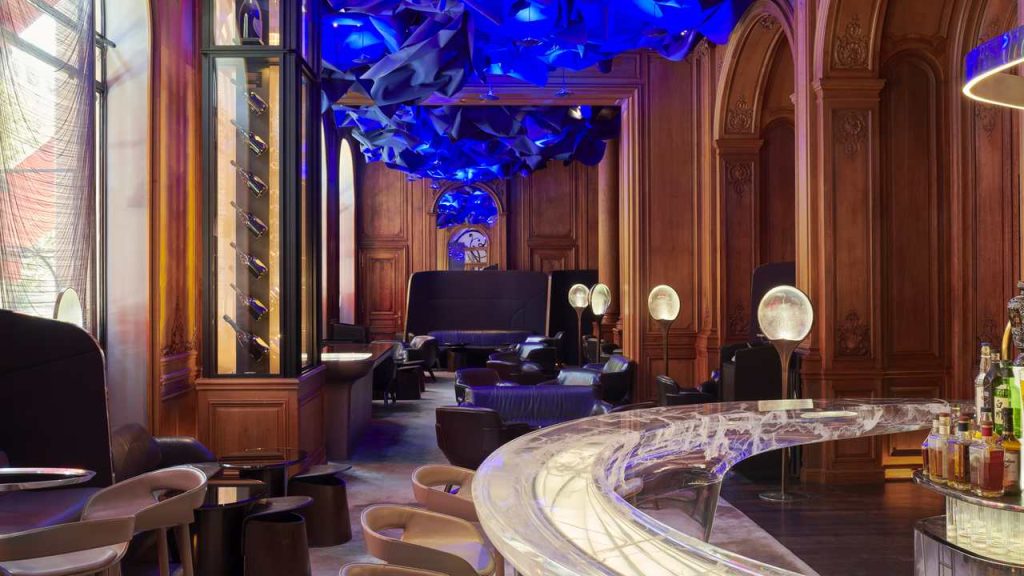
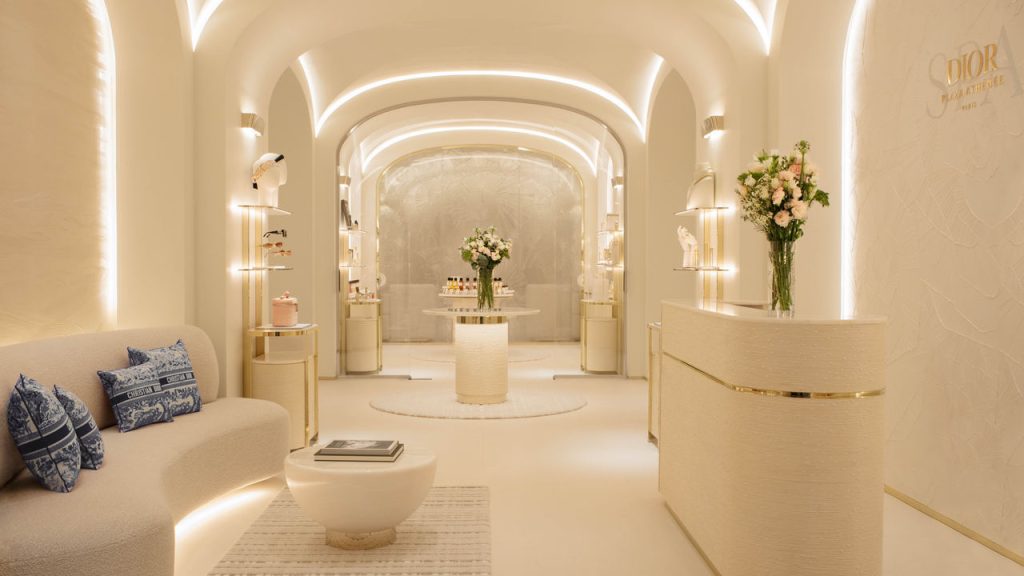
Official Dorchester Collection material also confirms a wider constellation of spaces including La Galerie, Le Bar, La Cour Jardin, La Terrasse Montaigne and the Dior Spa Plaza Athénée. The presence of the Dior Spa is especially telling at this address. On avenue Montaigne, where fashion remains part of the district’s public grammar, the spa extends the hotel’s dialogue with luxury branding beyond rooms and restaurants into wellness.
Here again, the factual ground is strongest when it stays close to named spaces and confirmed affiliations. The hotel operates the Dior Spa Plaza Athénée and promotes fitness facilities; it also maintains a bar and multiple hospitality venues under current official naming. What should not be invented are treatment claims, emotional transformations or service impressions unsupported by firsthand reporting. The documented reality is already sufficient: a grand Paris hotel using dining, social spaces and wellness to compose an all-day identity.
That composition helps explain the endurance of Hôtel Plaza Athénée as more than a celebrated façade. Verified facts show a property that continually renews itself while remaining legible through its address, architecture and institutional memory. In Paris, many hotels promise atmosphere. Here, at least part of that atmosphere is historically documented, formally protected, and visibly being updated for a new chapter.
Practical Information
Hôtel Plaza Athénée · 25 avenue Montaigne, 75008 Paris, France · Official website · Email the hotel
Sources: www.dorchestercollection.com · media.dorchestercollection.com
Tags: Avenue Montaigne, Dorchester Collection, fine dining, French Heritage, Historic Hotels, luxury hotels, Paris