Above Nice and the Baie des Anges
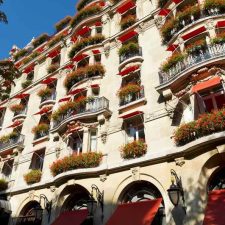
Nice is a city of shifting perspectives. At street level, the Promenade des Anglais belongs to walkers, cyclists and the steady movement of the seafront. A few streets inland, the Carré d’Or has another tempo: cafés, boutiques, late lunches and the elegant façades that tell the story of the Riviera as a winter destination for European travellers. Between the two, Maison Albar – Le Victoria has found a position that makes the city’s contrasts part of its appeal.
Opened on 15 November 2024, the five-star hotel stands at 6 avenue de Suède, close to Place Masséna and the waterfront. Its location is an asset that cannot be replicated by interior design alone. The Mediterranean is within easy reach; so are the gardens, shopping streets and the winding lanes of Vieux Nice. For visitors who want to experience the capital of the Côte d’Azur on foot, this is a remarkably practical starting point.
Yet Le Victoria is not conceived merely as a convenient base. Its owners describe it as a private Riviera residence translated into the language of contemporary hospitality. That ambition is visible in the combination of residentially styled accommodation, a substantial wellness space and a rooftop that opens towards the sea. Rather than turning its back on the city, the hotel offers several ways of looking at it: from a bedroom, from a terrace, from a restaurant table or from the edge of its rooftop pool.
The Riviera, interpreted rather than reproduced
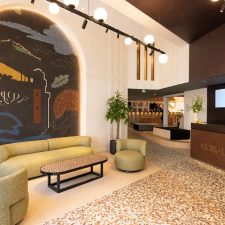
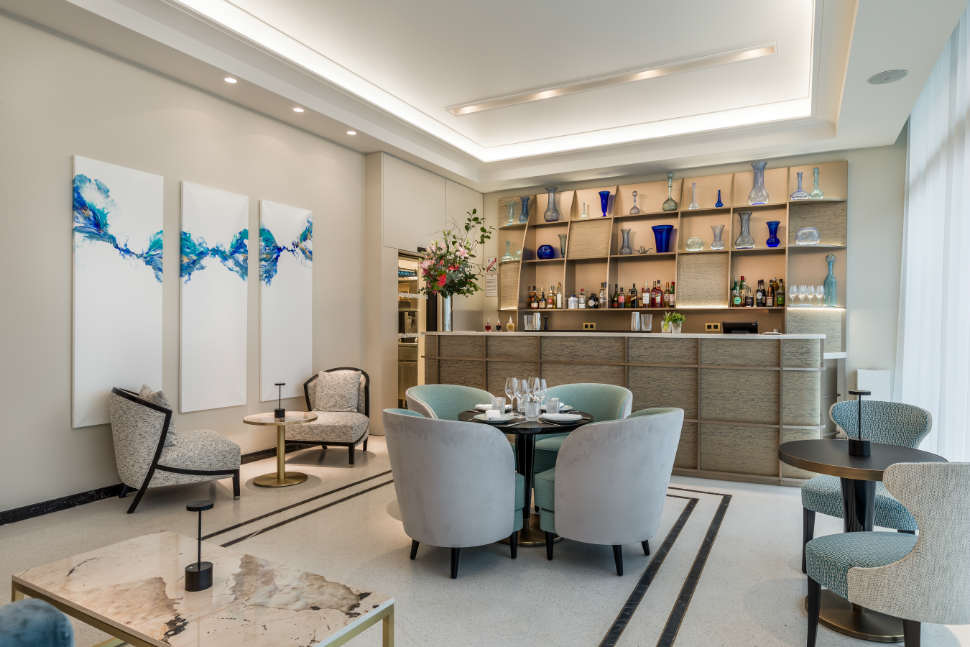
The design was developed by the GOMIS agency and Studio MHNA. Their approach draws on the great houses of the Riviera, with references to the decorative vocabulary of the 1930s and to the region’s relationship with light, water and craftsmanship. It is a contemporary interpretation, not a reconstruction of a Belle Époque palace. That distinction gives the interiors room to feel current while retaining a sense of place.
The hotel’s original presentation described a palette of whites, ivories and soft neutral tones, punctuated by Mediterranean blues and darker details. Woodwork, lacquer, stone and carefully chosen finishes provide a counterweight to the brightness of the coastal setting. The designers also looked towards local visual traditions, including the glassmaking associated with Biot and the architectural imagination of the Villa Kérylos. Such references are most effective when they contribute to the overall atmosphere rather than become a catalogue of decorative motifs.
Nice has a particular challenge for contemporary luxury hotels. Its historic identity is powerful: Russian aristocrats, British winter visitors, Italian influences, modern artists and generations of holidaymakers have all contributed to the city’s mythology. A new property cannot borrow that history as though it were its own. Le Victoria’s more convincing strategy is to acknowledge the setting through materials, proportions and views, while making a distinctly modern promise of comfort.
The result is a hotel that belongs to the city rather than pretending to be a country estate. It is designed for the traveller who wants to walk out into Nice and return to a calm interior without losing the sensation of being on the Mediterranean.
Rooms between sea and hills
Le Victoria has 102 rooms and 30 suites, a total of 132 keys. The division is worth noting because it gives the property a broader range of accommodation than a small boutique hotel while preserving an emphasis on individual comfort. Depending on the category and position in the building, rooms look towards the Bay of Angels or the hills behind Nice. Some include balconies, loggias or terraces, an important consideration for guests who hope to spend time outdoors without leaving their room.
The interiors continue the Riviera vocabulary of pale surfaces, soft contrasts and carefully composed furnishings. The ambition is not to overwhelm the guest with theatrical decoration but to create an easy transition between the energy of the street and the quiet of a private space. That can be especially valuable in a city whose pleasures often involve long days on foot.
Room selection matters here. A sea-facing view is different from a view towards the hinterland; a balcony is not automatically included in every category. Prospective guests should compare the precise room descriptions rather than assume that every booking offers the same outlook or outdoor space. This is not a qualification of the hotel’s appeal, but a practical way to make the most of an address where the relationship to the landscape is central.
The accommodation also illustrates the property’s wider idea of luxury. A city hotel need not separate guests from the destination to provide a sense of retreat. A room can offer privacy and quiet while keeping the sea, the rooftops and the changing light of Nice close at hand.
Taulissa, a rooftop with a culinary point of view
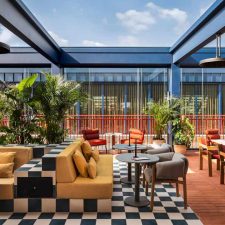
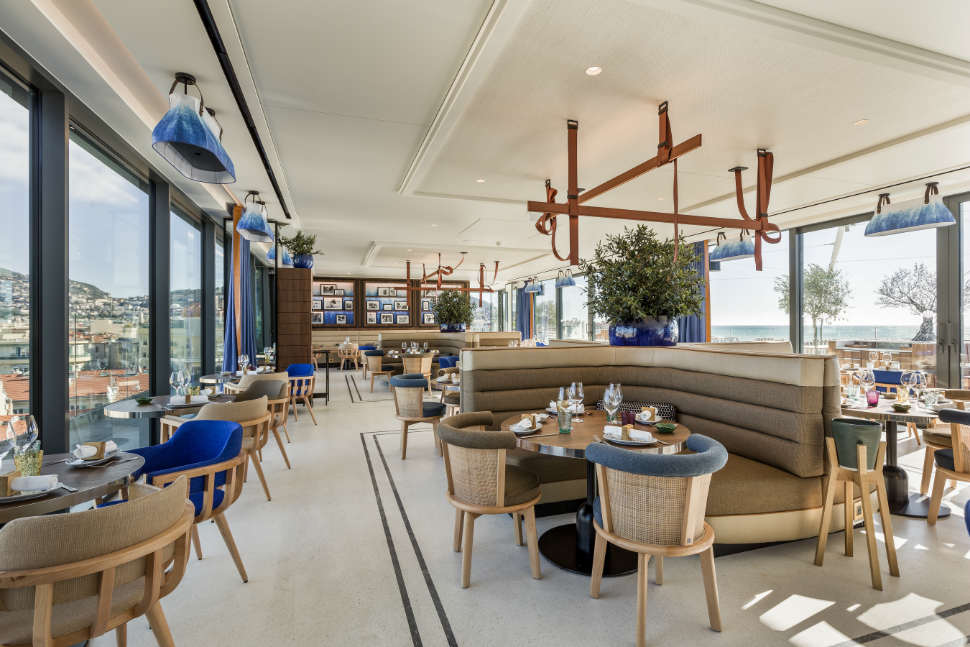
The most outward-looking space is the rooftop, where Taulissa combines a restaurant, bar and terrace with views over the Bay of Angels. Its culinary identity was developed with the three-Michelin-starred chef Glenn Viel, alongside chef Fred Grava. The restaurant’s setting is immediately persuasive: the skyline of Nice, the sea beyond it and the possibility of moving from a meal to an evening drink without changing address.
A famous chef’s involvement can easily become the only story told about a restaurant. Here it is more useful to consider how the dining experience relates to the city. Nice has its own culinary vocabulary, rooted in vegetables, olive oil, seafood and a long history of exchange between Provence and Liguria. A rooftop restaurant in this setting has an opportunity to engage with that identity while remaining contemporary in presentation and technique.
Menus, kitchen appointments and individual dishes change, and an enduring travel feature should not turn one seasonal menu into a permanent promise. What can be stated with confidence is the restaurant’s position within the hotel’s hospitality offer: Taulissa is both a destination for dining and one of the most distinctive places from which to contemplate the waterfront.
The rooftop bar extends the experience into the evening. At this height, the familiar seafront acquires a different geometry. The promenade becomes a line, the buildings form a backdrop and the Mediterranean supplies the horizon. The setting is part of the pleasure, but it does not replace the need for attentive service and a well-considered table.
Café Victoria and the social life of the hotel
Not every meal calls for a panoramic rooftop. Café Victoria provides a more informal social centre, a place where the hotel’s residential ambitions meet the practical rhythms of a city stay. Its published dining concept includes lighter dishes and a relaxed atmosphere, with contributions from Glenn Viel and Fred Grava. The space gives guests another choice beyond a full restaurant experience.
That variety is particularly useful in Nice, where a day rarely follows a single plan. One might return from the flower market at Cours Saleya, pause for lunch, head out again to a museum or the beach and come back for a drink. A hotel that supports these movements without demanding ceremony can become a more natural part of the journey.
The ground-level setting also connects Le Victoria to the commercial life of the Carré d’Or. The development includes a luxury retail component, described by the hotel as approximately 5,500 square metres of shopping space. The relationship between retail and hospitality is not new to the Riviera, but here it reinforces the property’s urban identity. This is an address designed for people who enjoy the city, not for those seeking to avoid it.
For visitors who prefer an unhurried evening, the hotel’s combination of café, bar and rooftop restaurant allows a choice of atmosphere. That freedom is more meaningful than a long list of amenities: it makes the stay adaptable to mood, company and season.
Oria Spa: another kind of Mediterranean retreat
The Oria Spa offers a quieter counterpart to the rooftop. The hotel currently describes a wellness space of approximately 650 square metres, with an indoor marble swimming pool, whirlpool, hammam, sauna and treatment rooms. Its visual language draws on warm, luminous materials, providing a contrast with the open blue of the sea outside.
There is an appealing symmetry in this arrangement. The rooftop celebrates exposure to the landscape; the spa offers enclosure and privacy. Guests can spend a morning walking along the Promenade des Anglais and return for an afternoon that requires no itinerary at all. In a city that is often experienced at a brisk pace, such a pause can be an important part of the trip.
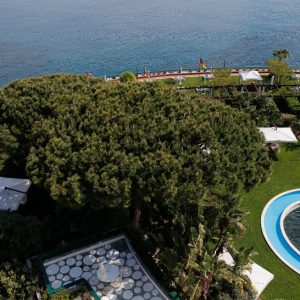
The hotel also advertises a fitness area and a rooftop infinity pool. The latter is an architectural highlight, but travellers should confirm seasonal access, opening arrangements and any restrictions directly with the property. The same applies to treatments, which may require advance booking. Precise planning is particularly useful for short stays when a spa appointment is central to the experience.
Wellness is most convincing when it complements a destination rather than competes with it. At Le Victoria, the spa’s strength lies in making it possible to enjoy both sides of Nice: the active, sociable city and the quieter pleasures of time spent indoors.
Nice, beyond the postcard
The hotel’s location places several of Nice’s defining experiences within walking distance. The Promenade des Anglais remains the city’s most recognisable public space, but its value is not simply scenic. It is where residents exercise, visitors stroll and the changing Mediterranean light becomes part of everyday life. Nearby, the Jardin Albert Ier offers a green transition towards Place Masséna, one of the city’s great urban gathering places.
Vieux Nice offers a different texture. Its narrower streets, markets and small squares reveal the city’s Italianate heritage and its long relationship with Liguria. Cours Saleya is famous for its market, but the pleasure of the old town also lies in its ordinary details: a café opening for the morning, a small shop, a church façade glimpsed at the end of a lane. This is a neighbourhood best explored without treating every stop as a compulsory attraction.
The city’s cultural life deserves equal attention. The Musée Matisse and the Musée Marc Chagall speak to the extraordinary role that light and landscape played in twentieth-century art. The hill of Cimiez provides a different historical perspective, while the port and the streets beyond it show a more contemporary side of Nice. A stay at Le Victoria makes it possible to move among these districts without losing the central waterfront as a point of reference.
There is also value in leaving time unassigned. A long lunch, an afternoon walk or a return to the sea at dusk can say as much about Nice as a tightly organised sightseeing programme. The city’s identity is made from such rhythms as much as from its monuments.
A contemporary address in an evolving Riviera
Maison Albar – Le Victoria arrived in a city whose luxury hotel landscape is continually changing. New openings and ambitious renovations have broadened the choices available to travellers, from historic grand hotels to smaller design-led properties. Le Victoria’s response is to combine the scale and services of a substantial five-star hotel with the intimacy suggested by a Riviera residence.
The hotel has also received a Michelin Key distinction in 2026, according to its official website, and states that it holds the Clef Verte environmental label. These recognitions belong to different systems and should not be confused: one concerns the hotel experience, the other sustainability practices. Neither replaces the more basic questions a traveller should ask about location, room category, service and the type of stay desired.
What distinguishes Le Victoria is the way its principal spaces relate to the destination. The rooms frame the sea or the hills. The rooftop opens towards the bay. The spa provides an interior retreat. The restaurants and café connect guests with the social rhythm of Nice. These are complementary experiences, not competing identities.
For travellers who want a central address from which to discover the Côte d’Azur while retaining the comforts of a full-service luxury hotel, Le Victoria makes a coherent proposition. Its most compelling asset is not a single view or facility, but the ability to move easily between the city’s public life and a private world of contemporary Riviera hospitality.
Hotel Information
6 avenue de Suède, 06000 Nice, France
Telephone: +33 4 22 70 08 00
Website: Official website
Tags: France, French Riviera, luxury hotels, Maison Albar Le Victoria, nice