Andaz Lisbon in the heart of Baixa
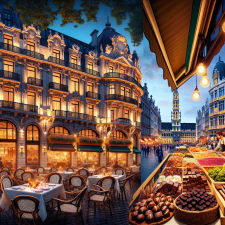
Lisbon has a way of making a visitor aware of its geography. The city rises and falls between steep neighbourhoods, tiled façades and terraces that suddenly open towards the Tagus. Down in Baixa, however, the streets are more deliberate. Their orderly grid leads towards Praça do Comércio, the vast square facing the river, and the architecture tells the story of a capital rebuilt after catastrophe. It is in this setting, on Rua do Comércio, that Andaz Lisbon opened in March 2026, introducing Hyatt’s lifestyle brand to Portugal.
The hotel occupies a position between the ceremonial scale of the square and the everyday movement of central Lisbon. The triumphal Rua Augusta Arch is nearby, as are the shopping streets and cafés that give Baixa its constant activity. A guest can begin the morning by the river, walk north towards Rossio or climb into Chiado without organising the day around taxis. In a city where neighbourhoods have such distinct personalities, that freedom is a considerable advantage.
Andaz Lisbon has 170 rooms and suites. It is not a small guesthouse masquerading as a grand hotel, nor a remote resort promising an invented sense of place. Its ambition is to be an urban address that responds to the city around it. The idea is expressed through locally informed design, a rooftop restaurant, a relaxed lounge and an emphasis on the creative life of Lisbon. Whether the concept succeeds depends less on a slogan than on the quality of those connections.
The city beneath the city
Baixa’s geometry is the result of one of the defining events in Portuguese history. On 1 November 1755, an earthquake, followed by fires and a tsunami, devastated much of Lisbon. The reconstruction directed under the Marquis of Pombal produced a rational street plan and an architectural language now inseparable from the city’s identity. The neighbourhood is therefore more than a picturesque collection of pale façades: it is an eighteenth-century response to urban destruction and the need to build again.
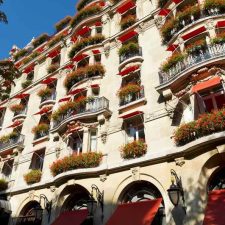
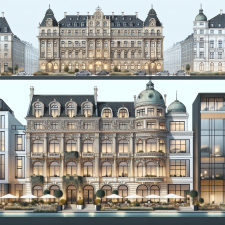
Andaz Lisbon inhabits a group of restored historic buildings, formerly associated with residences and financial institutions. This is an important distinction. The hotel is a contemporary hospitality project inserted into a complex urban fabric, rather than a surviving palace simply opened to guests. The relationship between the old structures and their new use is part of the architectural interest.
Outside, the Rua Augusta Arch frames the approach to the river; beyond it, the openness of Praça do Comércio provides a dramatic contrast with the tighter streets of Baixa. To the east, Alfama climbs towards São Jorge Castle. To the west, Chiado brings a different mix of bookshops, theatres and cafés. The hotel’s location makes these changes of atmosphere immediately accessible, and allows Lisbon itself to provide the most memorable parts of the itinerary.
Patricia Urquiola and the language of Portuguese craft
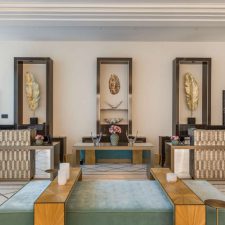
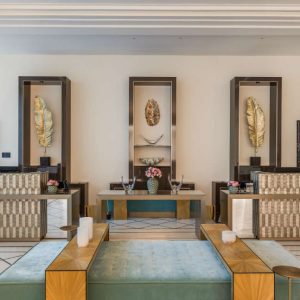
The interior concept was developed with designer Patricia Urquiola and Moerschel Arquitectos. Their approach draws on materials and techniques that carry associations with Portugal while resisting the temptation to create a period stage set. Cork, stone, mosaic tile and mahogany are used within a layered contemporary palette. Colour and texture matter as much as furniture: the rooms and public spaces are intended to suggest the richness of a city shaped by trade, craftsmanship and successive cultural encounters.
Cork is an especially appropriate choice. Portugal is closely associated with the material, whose tactile warmth makes it useful in contemporary interiors without disguising its natural character. Tilework, meanwhile, has an architectural and artistic history visible throughout Lisbon, from building façades to churches and railway stations. In the hotel, such references are interpreted rather than simply copied.
The result belongs to a wider conversation about how international hotel brands can engage with local design. A decorative motif is not, on its own, proof of authenticity. What matters is whether the materials, proportions and experience of a place feel connected to the surrounding city. At Andaz Lisbon, the strongest visual ideas come from that dialogue between modern hospitality and the craft traditions of Portugal.
Rooms that keep the capital in view
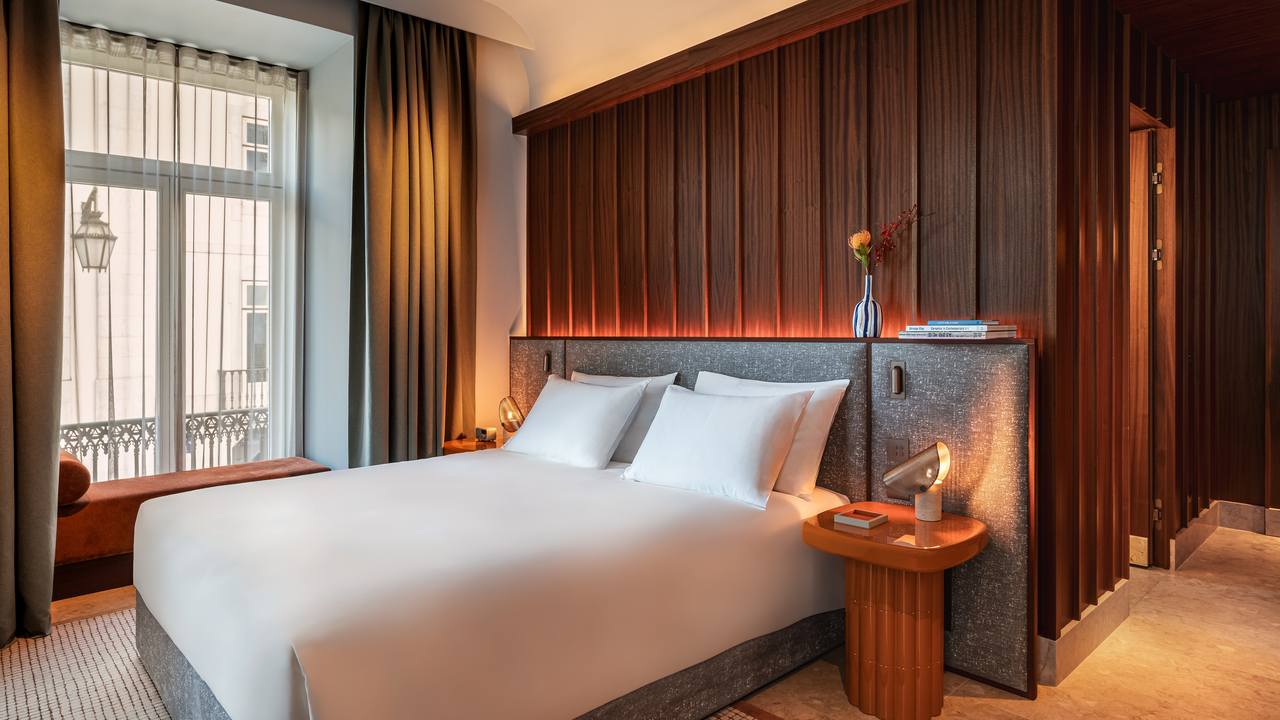
The hotel’s 170 guestrooms and suites offer a range of outlooks and configurations. Current categories include rooms with views towards Rua Augusta and city landmarks, alongside larger suites such as the Loft Suite, Andaz Arch Suite and Presidential Suite. The precise view depends on the booked category; the entire property should not be described as if every room faced the Tagus.
Inside, the use of natural materials gives the accommodation a tactile quality. Stone finishes, cork details and mosaic accents are set against contemporary furnishings and integrated technology. Hyatt identifies Byredo bath amenities among the in-room details. These features contribute to a sense of considered comfort, but the essential attraction is the relationship between a calm private interior and the movement of Baixa outside.
For a short visit, the location allows guests to return between excursions, whether to rest after a museum, change before dinner or spend an hour working. For a longer stay, a suite provides room to settle into the city at a different pace. Lisbon is not a place that rewards being rushed from one viewpoint to the next. The best accommodation gives visitors the freedom to let a day unfold.
Luzzi: the city from the rooftop
At the top of the hotel, Luzzi brings dining and the skyline into the same experience. The venue combines a rooftop restaurant with a terrace lounge, offering modern Portuguese cooking informed by the country’s historical connections beyond Europe. Hyatt’s description looks to the culinary exchanges linking Portugal with places such as Goa, Macau and Brazil. This is a promising framework for a menu: Portuguese food has never existed in isolation from the routes travelled by merchants, sailors and migrants.
The rooftop setting gives the meal an urban dimension. From above, the regular lines of Baixa and the open light of the river provide a perspective different from the street. The atmosphere changes across the day, from a brighter lunchtime setting to the more sociable mood of evening cocktails. Specific dishes and musical programming may vary, and are better checked on the current menu than repeated as permanent features.
Lisbon’s dining scene is broad enough to reward exploration far beyond the hotel. Traditional taverns, contemporary kitchens and seafood restaurants coexist across the capital. Luzzi’s contribution is to provide a place where that wider culinary conversation can be encountered without leaving the building, while still feeling connected to the city through the view and the ingredients.
The Andaz Lounge and the art of meeting
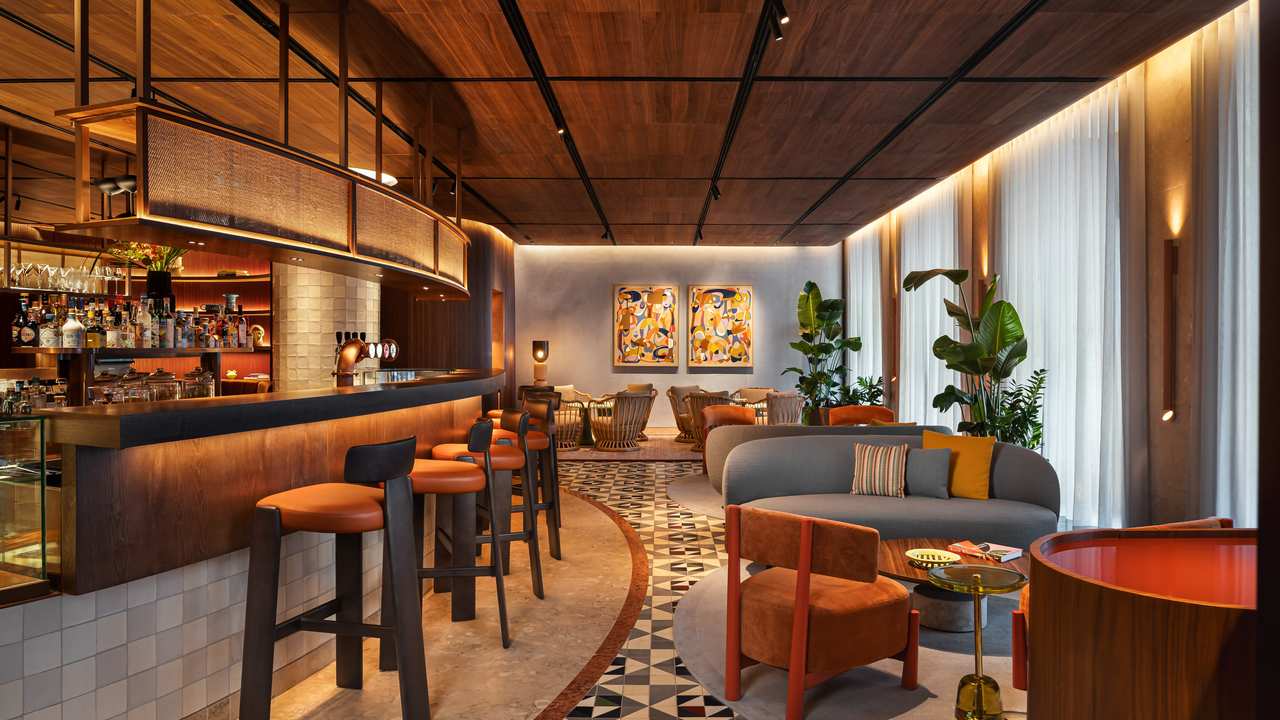
The Andaz Lounge offers a less formal counterpoint to the rooftop. Its inspiration comes partly from Lisbon’s kiosk and café culture, a social tradition that belongs as much to the city’s squares and gardens as to its dining rooms. The lounge serves reinterpreted Portuguese classics, drinks and lighter fare in a setting designed for conversation.
This distinction between the two dining spaces is important. A good urban hotel should offer different ways to spend time: a table for an occasion, a comfortable seat for a short meeting, somewhere to pause between walks. The lounge is intended to serve those everyday moments rather than turn every visit into a performance.
The idea also reflects a defining characteristic of Lisbon. Much of the city’s appeal lies in the spaces between destinations: a coffee taken outside, a conversation in a square, a late-afternoon drink before heading uphill. The hotel’s public areas make most sense when viewed as an extension of that social life.
Wellness without invented promises
Andaz Lisbon has a fitness centre equipped for guests who want to maintain their routines while travelling. At the time of this review, the hotel’s official website describes its spa as forthcoming, rather than advertising a fully operational treatment complex. That difference matters. In-room wellness services may be available, but travellers for whom spa facilities are essential should confirm the current offering before making a reservation.
In a city as walkable and hilly as Lisbon, movement is likely to be part of the day in any case. Exploring Baixa, climbing towards viewpoints and wandering the riverfront offer a more spontaneous form of activity than any programmed workout. The hotel’s central position makes it possible to combine these experiences with time indoors.
The most valuable luxury after a day in Lisbon may be an unhurried evening: a return to the room, a drink on the rooftop and the knowledge that tomorrow’s discoveries begin only a few steps away.
A city best approached without a rigid itinerary
From Andaz Lisbon, the great public spaces of the lower city are close at hand. Praça do Comércio opens directly towards the Tagus, while Rua Augusta provides the pedestrian route towards Rossio. Chiado lies within walking distance, with its theatres, bookshops and cafés. Alfama offers a contrasting experience of steep lanes, historic churches and viewpoints. Visitors interested in music can seek out the city’s fado tradition, paying attention to the character of individual venues rather than treating a performance as a generic tourist obligation.
Lisbon’s history extends far beyond the familiar postcard images of yellow trams and patterned pavements. The city was a centre of imperial maritime expansion, commerce and cultural exchange, and its museums and monuments also invite reflection on the more difficult dimensions of that history. An informed visit can appreciate the beauty of the architecture without flattening the past into a decorative backdrop.
The city’s hills can make distances deceptive, so a day is often best organised by neighbourhood rather than by a long checklist of attractions. Baixa is a practical starting point because it connects the waterfront with several of the capital’s most compelling districts. The hotel’s location supports a slower, more observant way of travelling.
A contemporary address in an old capital
Andaz Lisbon arrived in March 2026 as the first Portuguese property in Hyatt’s Andaz portfolio. Its opening is significant for the brand, but the more interesting question is what it adds to the city. The answer lies in a combination of location, design and public spaces: a hotel within the historic fabric of Baixa, rooms informed by Portuguese materials, and places to eat and gather that acknowledge Lisbon’s international character.
The property is particularly well suited to visitors who want to experience the city on foot while retaining the comforts of a full-service luxury hotel. It will also appeal to travellers interested in design, for whom the interplay of restored buildings and contemporary interiors forms part of the attraction. As with any new hotel, some aspects of the offering may continue to evolve; practical details should be checked directly with the property.
Ultimately, Lisbon is the reason to stay here. The river, the streets, the architecture and the city’s distinctive social life are not accessories to the hotel experience. They are its substance. Andaz Lisbon is at its most persuasive when it allows guests to move naturally between those worlds: the intimate scale of a room, the conviviality of a lounge, the view from a rooftop and the extraordinary city beyond the door.
Practical Information
Andaz Lisbon · Rua do Comércio, Baixa, Lisbon, Portugal · Official website · Email the hotel
Tags: Andaz, Baixa, Hyatt, Lisbon, luxury hotels, Portugal