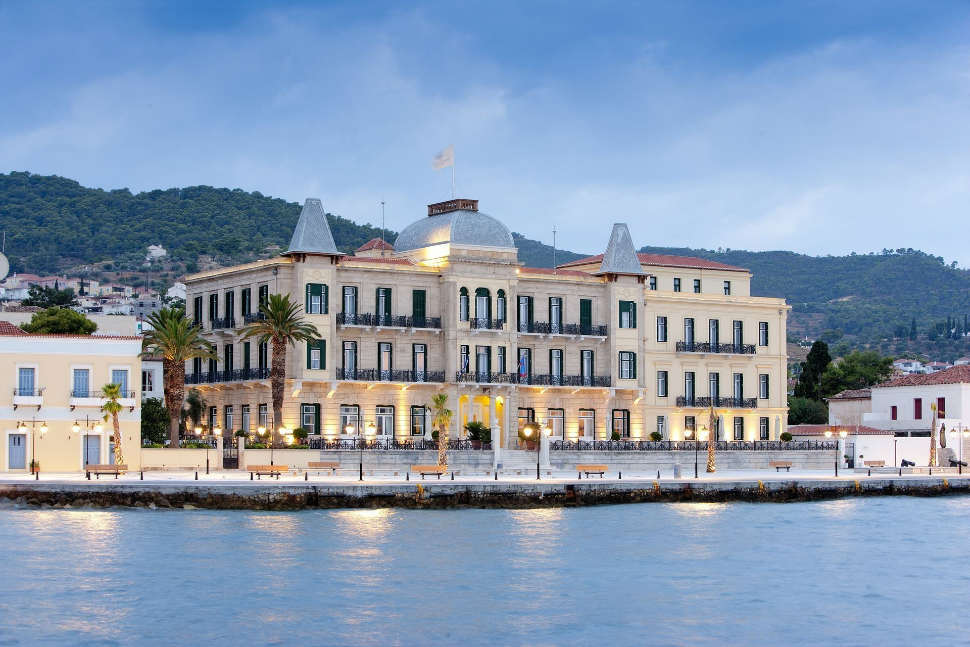
The grand hotel on Spetses harbour
The first impression of Spetses is not of a remote island withdrawing from the world. At Dapia, the waterfront is animated by boats, conversations and the daily movement of a small Greek port. Against that setting, the Poseidonion Grand Hotel makes a remarkably assured entrance. Its pale façade, symmetrical composition and long verandahs belong to an architectural language more readily associated with the grand resorts of the French Riviera. Yet this is unmistakably a Greek island hotel, shaped by the light of the Saronic Gulf and by more than a century of local history.
There is an old-fashioned pleasure in arriving somewhere that has not surrendered its identity to the international vocabulary of luxury. The Poseidonion is not simply a comfortable place from which to explore Spetses; it is one of the buildings by which the island is recognised. Its relationship with the port is direct and theatrical. The life of Dapia unfolds in front of it, while the hotel’s public spaces offer the option of watching that life at a gentler pace.
Spetses has long attracted Athenians looking for a change of scene, as well as visitors drawn by its maritime past, pine-covered landscapes and sheltered bays. The island’s scale is part of its appeal. A short stay can encompass the harbour, the old port, beaches, a leisurely meal and the unplanned discoveries of a walk through residential streets. The hotel gives those experiences a distinguished point of departure, but its history is sufficiently interesting to deserve attention in its own right.
The vision that brought a Riviera hotel to Greece
The Poseidonion opened in the summer of 1914, the culmination of a project conceived by Sotirios Anargyros, a wealthy Spetsiot benefactor who helped transform the island’s prospects. The A.K.S.S. Foundation, which preserves information about the property, records that construction began in 1911 and was completed in the spring of 1914. It attributes the architectural design to Panagiotis Zizilas. The hotel’s appearance, with its formal frontage and resort-hotel proportions, reflected an ambition to bring the standards of fashionable European hospitality to Spetses.
This was not a modest undertaking. The foundation describes the building as an exceptional project for its period, requiring a substantial workforce and sophisticated equipment. Anargyros’s wider ambitions for the island extended beyond a single hotel: he saw tourism and public improvement as connected parts of a modern future. The Poseidonion was both a commercial enterprise and a statement about what Spetses could become.
The timing is poignant. Europe was about to enter the First World War, and the confident cosmopolitanism expressed by the new hotel would soon be tested by events far beyond the Saronic Gulf. Nevertheless, the Poseidonion established itself as a gathering place for prominent Greek society and international visitors. Its grand verandah was suited to receptions, conversation and the kind of social life that made a hotel more than accommodation.
The property describes its early identity through the Greek idea of philoxenia, a word often translated as hospitality but carrying a broader sense of generosity towards the guest. It is a useful concept here, provided it is understood as a cultural ideal rather than a marketing guarantee. Anargyros’s project was conceived at a moment when Greece was beginning to articulate a more ambitious place in international leisure travel. The Poseidonion remains an unusually visible record of that aspiration.
A restoration that kept the past in view
Like many historic resort hotels, the Poseidonion experienced changes of fortune. Holiday habits evolved, buildings aged and the expectations of travellers shifted. Its return to prominence followed a five-year restoration programme, with the refurbished hotel reopening in 2009. The work was intended to bring contemporary comfort to the property without sacrificing the architectural identity that had made it a landmark.
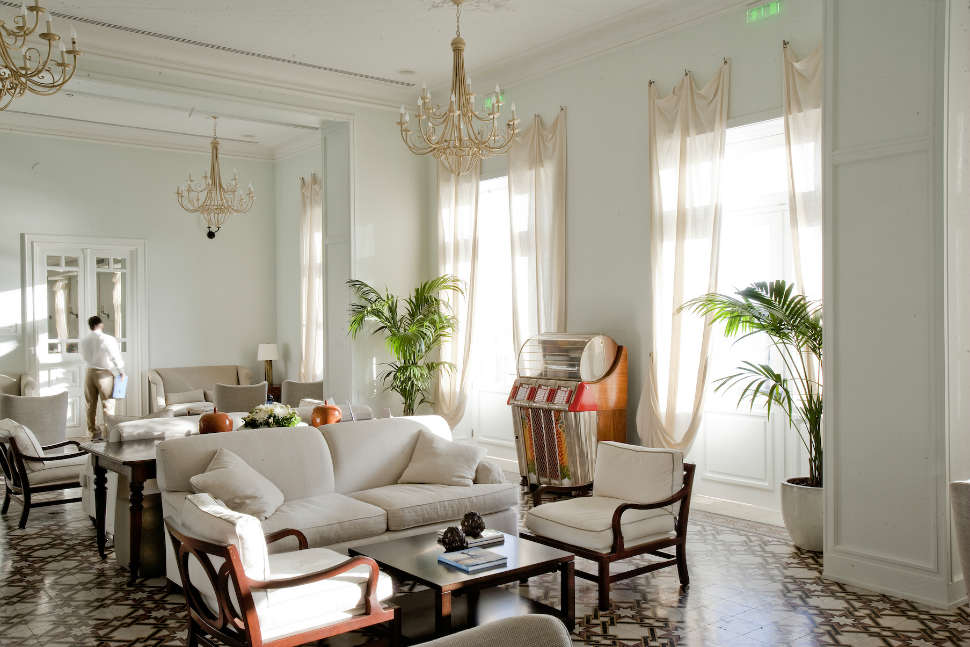
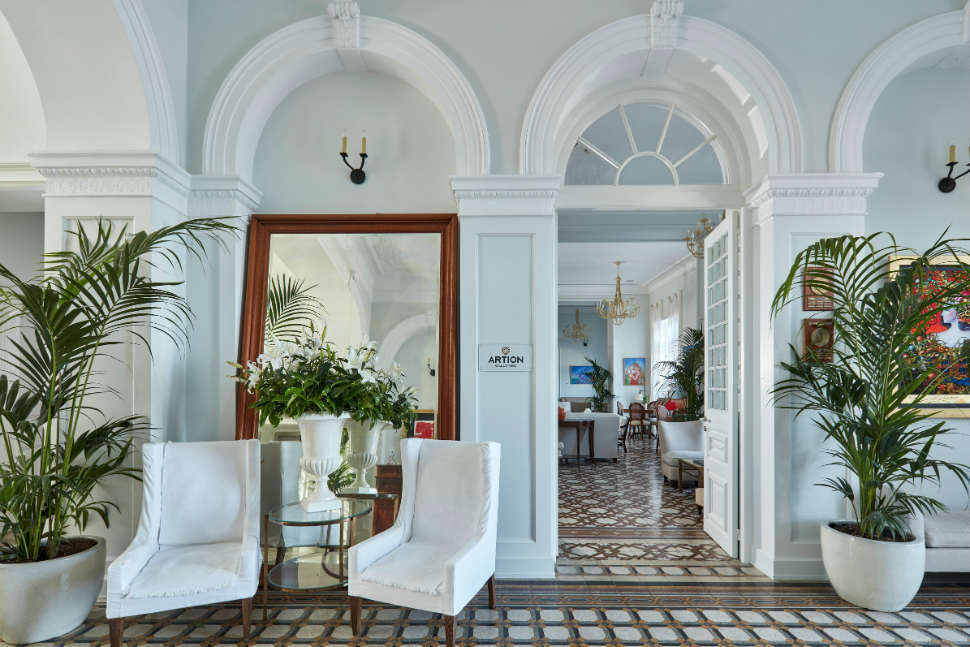
The difference between restoring a historic hotel and merely decorating a new one in period style is significant. In the former, proportion, circulation and inherited details help determine the character of the stay. At the Poseidonion, the architectural presence of the original building remains central. The formal frontage and verandahs still establish the hotel’s public identity, while the interiors must answer the very different expectations of twenty-first-century travellers.
A hotel of this kind carries an obligation to the island as well as to its guests. Its exterior belongs to the collective memory of the waterfront; any major intervention changes a familiar view. The 2009 reopening therefore matters as a chapter in the preservation of Spetses’s built heritage, not simply as a new entry in the luxury market. The building was given another working life, rather than being preserved as an empty monument.
The restored property comprises a historic wing and a newer wing, with different room and suite categories. This arrangement is an important practical distinction: the character, layout and outlook of accommodation can vary. The visitor should not assume that every room reproduces the same historical setting, nor that all have a sea-facing balcony. What the property offers is a choice of experiences within the identity of one established island address.
Rooms, verandahs and the art of slowing down
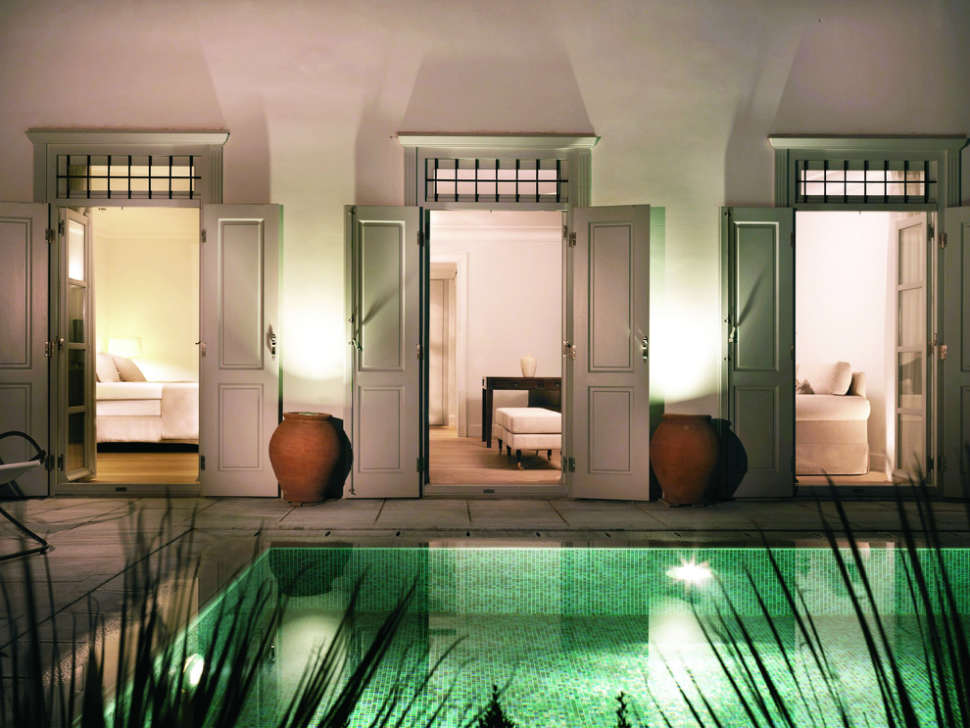
The hotel’s accommodation is designed to serve different kinds of island stay, from a brief escape to a more extended gathering of friends or family. Some rooms look towards the port and the water; others have access to gardens or private outdoor areas. The appeal of a balcony is easy to understand in Spetses. Here, a few minutes watching the changing harbour light can be as memorable as a carefully planned excursion.
Older accounts of the hotel give a total of 44 rooms and eight suites, a figure reported by the Athens hotel association in 2019. Because accommodation categories can change, that historical count is better treated as a dated reference than as an unquestioned statement of today’s inventory. The current official site invites guests to choose between its historic and new wings and provides the appropriate details for each category.
The most successful resort rooms are not necessarily the most elaborate. They make it easy to inhabit a different rhythm: to leave the shutters open for the morning light, read before breakfast, or return from a swim without feeling obliged to move immediately to the next appointment. The Poseidonion’s relationship with the sea and port gives such moments their particular atmosphere.
For those travelling as a group, suite configuration and outdoor space deserve as much attention as decorative style. A large terrace can become a private social room in its own right; a garden-facing room may offer greater tranquillity than a prominent waterfront outlook. Choosing well is part of the pleasure of staying in a historic property whose accommodation is not entirely uniform.
The verandah as a dining room
There are few more fitting settings for dinner on Spetses than the verandah of the island’s great historic hotel. On the Verandah is the Poseidonion’s principal fine-dining restaurant, with a contemporary Greek approach informed by local ingredients and culinary traditions. The official restaurant page identifies it as a seasonal operation, generally from May to September, rather than a year-round promise. Guests travelling outside the summer season should check which dining spaces are operating.
The setting contributes as much to the experience as the menu. A table overlooking the port brings the movement of boats and the evening light into the meal. It also makes a connection between the hotel’s social history and its present life: the verandah that once hosted elegant gatherings continues to function as a place where people come together.
The restaurant describes a kitchen that interprets Greek flavours through contemporary techniques. It is a more persuasive culinary story than a list of fashionable ingredients. Greece’s regional cooking has always depended on season, landscape and the quality of simple produce. On an island, that relationship is especially vivid, and a good meal can feel inseparable from the sea air and the surrounding streets.
The Library Brasserie offers a less formal alternative, with light meals, snacks and desserts. Palms The Bar provides another kind of evening ritual: a cocktail with a view of the Saronic Gulf. These are distinct experiences, not interchangeable labels for a single restaurant. Together they allow guests to move between a leisurely lunch, an occasion dinner and an informal drink without leaving the property.
Bostani: the island beyond the plate
One of the most distinctive aspects of the Poseidonion’s food programme lies away from the formal dining rooms. Bostani, the hotel’s organic farm, supplies produce and forms the setting for a farm-to-table experience. The official hotel website presents it as an opportunity to dine outdoors in closer contact with the agricultural landscape of Spetses.
That connection matters because the word local is too easily used as a vague promise. A working farm makes the relationship between cultivation and cuisine tangible. Vegetables, herbs and seasonal ingredients have a place of origin, and the menu can be understood as part of a wider landscape rather than an isolated exercise in restaurant technique.
Bostani also broadens the visitor’s idea of the island. Spetses is often photographed through boats, façades and beaches, but its rural spaces and pine-covered interior are just as important to its identity. A meal at the farm offers a change of setting from the waterfront and a reminder that the pleasures of Mediterranean travel are not confined to the shoreline.
Availability and the exact format of the experience may depend on the season and on advance arrangements. It is therefore best regarded as an experience to enquire about, rather than an amenity automatically included in a hotel stay. That practical qualification does not diminish its appeal. On the contrary, it underlines the fact that the most memorable culinary encounters are often shaped by place and time.
Wellbeing in the Saronic light
The Poseidonion has long associated itself with wellness. Its own historical account says that the original hotel pioneered spa services in Greece, a claim best understood as part of the property’s account of its early ambitions rather than as a definitive survey of every Greek hotel of the period. The contemporary wellness offering continues that theme through treatments and facilities intended to complement an island holiday.
There is a natural logic to wellness on Spetses. The day can begin with a walk by the water, continue with time at the beach and end with a quiet treatment or an hour of rest. The hotel’s pool and wellness services provide additional options, although specific treatment menus and operating arrangements should be confirmed before booking.
It is tempting to describe every Mediterranean island as a sanctuary of perfect tranquillity. Spetses is more interesting than that. Dapia can be lively, particularly in the height of the season, and the social energy of the port is part of its character. The luxury lies in being able to choose when to join it and when to retreat.
That freedom is one of the hotel’s strongest assets. A guest can spend the day exploring, return for a swim or a restorative pause, and re-emerge for dinner on the verandah. The itinerary is simple, but its simplicity is precisely what makes it satisfying.
Exploring an island with a maritime memory
Spetses’s history is inseparable from the sea. Its shipowners and sailors played a notable role in the Greek War of Independence, and the island’s maritime identity remains visible in its harbour, architecture and local museums. The old port, with its boatyards and waterfront buildings, rewards a slower exploration than a hurried sightseeing circuit.
The island is particularly enjoyable on foot, by bicycle or through locally available transport. Its central areas are known for restrictions on ordinary private-car traffic, although it would be misleading to claim that no motor vehicles operate anywhere on Spetses. The practical effect for visitors is a different street rhythm from that of a mainland resort town.
Beaches and coves offer another perspective. Some are easily reached from the town, while others invite a longer excursion. The pleasure of Spetses is not in ticking off every stretch of sand but in discovering how the landscape changes between busy waterfront and quieter shore. Pine trees, stone walls, small churches and glimpses of the gulf give even a modest outing a sense of variety.
A cultural visit can include the island’s museums and its association with the heroine Laskarina Bouboulina, one of the best-known figures of the independence struggle. These stories add depth to the holiday setting. They explain why Spetses is not merely a picturesque summer escape but a place with a powerful historical identity.
Returning to the Poseidonion after such an excursion creates a pleasing continuity. The hotel belongs to the same maritime and social history as the streets beyond its doors, even as it offers a more polished setting in which to reflect on the day’s discoveries.
An island institution still very much alive
The Poseidonion Grand Hotel has survived because its story has continued to change. It began as the ambitious vision of a local benefactor, became a social landmark, endured the uncertainties that affected many historic hotels and returned after an extensive restoration. Its present appeal is rooted in that continuity, not in a claim that time has stood still since 1914.
For travellers interested in architecture, the façade and verandahs offer a rare example of Riviera-inspired resort design transplanted into a Greek island setting. For those drawn by food, the combination of On the Verandah and Bostani makes the relationship between refined dining and local cultivation especially attractive. For others, the pleasure may be no more complicated than a room overlooking the harbour and the freedom to spend several days without a rigid plan.
The hotel is at its most convincing when understood as part of Spetses rather than apart from it. Its terraces face the life of the port; its culinary programme reaches into the island’s fields; its history belongs to a period when Greek tourism was finding new forms. It offers the elegance of a grand hotel without requiring the visitor to forget where they are.
More than a century after its opening, the Poseidonion remains an invitation to experience a particular kind of Mediterranean travel: sociable but unhurried, historically conscious but not nostalgic, and attentive to the simple pleasure of being somewhere that could not be mistaken for anywhere else.
Practical Information
Poseidonion Grand Hotel