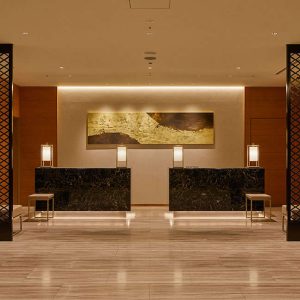
In the shadow of the Japanese Alps
The road into Omachi, in Japan’s Nagano Prefecture, offers a change of scale. Beyond the towns and transport links of central Honshu, the Northern Japanese Alps rise in a succession of ridges, their appearance shifting with the weather and the season. In winter the region belongs to snow, ski journeys and the particular hush of mountain settlements. In warmer months, water, forest and walking routes draw attention back to the terrain. It is in this landscape, at Omachi Onsen, that KAI Alps makes its case for a slower, more culturally rooted form of luxury.
This is not an Alpine hotel attempting to reproduce a European chalet. Part of Hoshino Resorts’ KAI collection of hot-spring ryokan, KAI Alps takes its vocabulary from Shinshu, the historic name for Nagano, and from the practical intelligence of Japanese country houses. Its defining images are not grand staircases or theatrical lobbies but a hearth, a sheltered passage, the steam of a bath and the glow of handmade paper. The property’s modern hospitality is shaped around traditions that once made long winters more companionable.
The address has a story of its own. The ryokan opened as a KAI property in 2012 and underwent an extensive renovation before reopening in 2017. The result is not a reconstruction of an untouched past. It is an interpretation: contemporary accommodation arranged around familiar forms, allowing a visitor to understand something about the local way of life without sacrificing comfort. The distinction is central to the story. The most interesting luxury hotels do more than provide an attractive room; they offer a convincing reason to be in one place rather than another.
The Architecture of Warmth
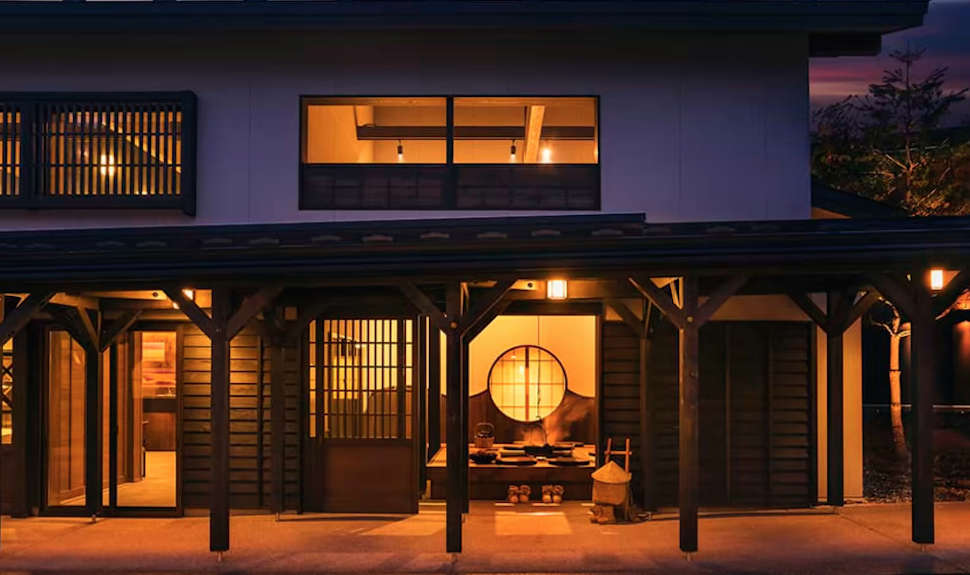
One of the most telling details at KAI Alps is the gangi, a form of extended eave and covered passage associated with places where winter snowfall can make ordinary movement difficult. The architecture answers the climate before it addresses aesthetics. It recalls a time when the journey between neighbouring buildings was itself something to plan for, and when shelter was an everyday necessity rather than a decorative gesture.
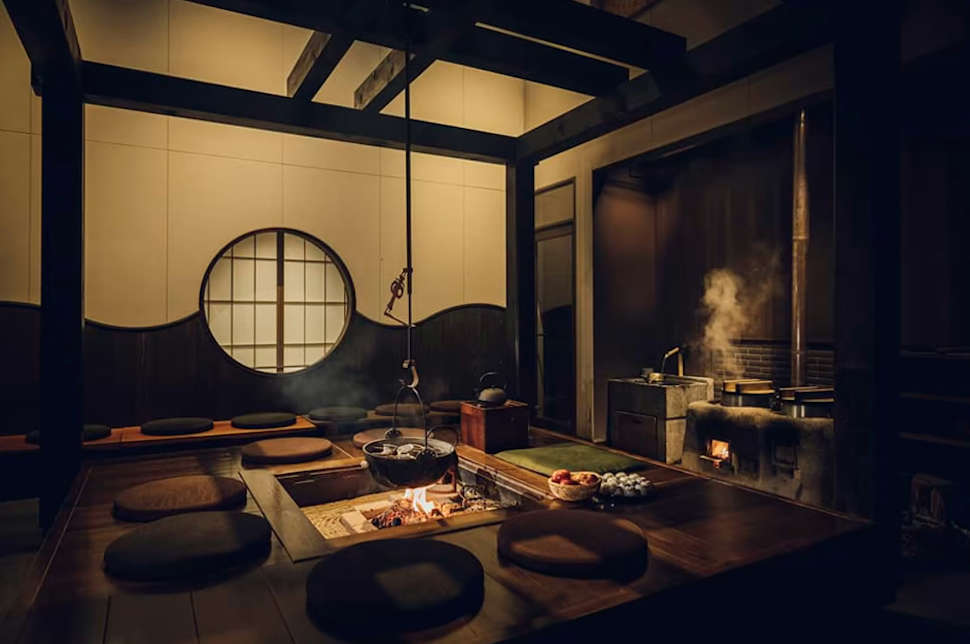
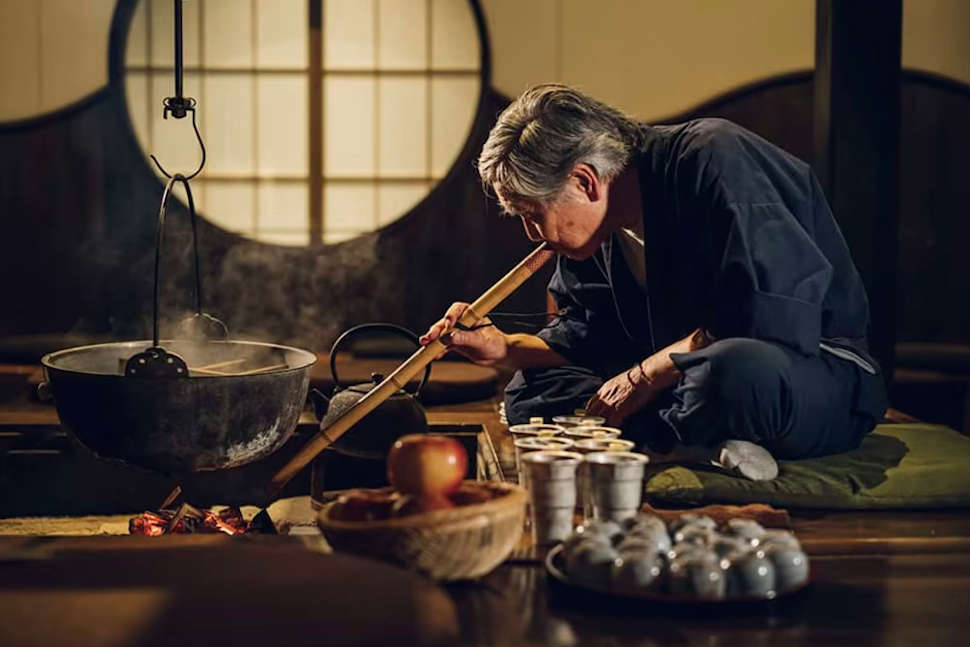
Inside, the irori takes centre stage. A sunken hearth was once the social heart of many Japanese homes, used for heating and cooking and, just as importantly, for conversation. Around a fire, time has a different texture. Food is prepared in view of the people who will eat it; stories have room to develop; visitors cease to be anonymous passers-by. KAI Alps translates this domestic tradition into a shared hospitality experience, with snacks and regional sake offered around the hearth.
The doma, an earthen-floored area historically positioned between the outdoors and the raised interior of a house, provides another clue to the design. Such spaces belonged to working households, where cooking, storage and daily tasks had to coexist with family life. Here they help establish a sense of place. The contrast between these modest, functional references and the refinement expected of a contemporary ryokan is precisely what gives the property its personality. Rather than erase the labour and ingenuity of rural life, the design allows their traces to remain visible.
There is an important difference between nostalgia and cultural continuity. A picturesque object can be admired and forgotten; a hearth that is actually used invites participation. The architecture at KAI Alps is most persuasive when its traditional elements become part of the rhythm of the stay rather than simply the backdrop to a photograph.
Rooms That Speak the Language of Shinshu
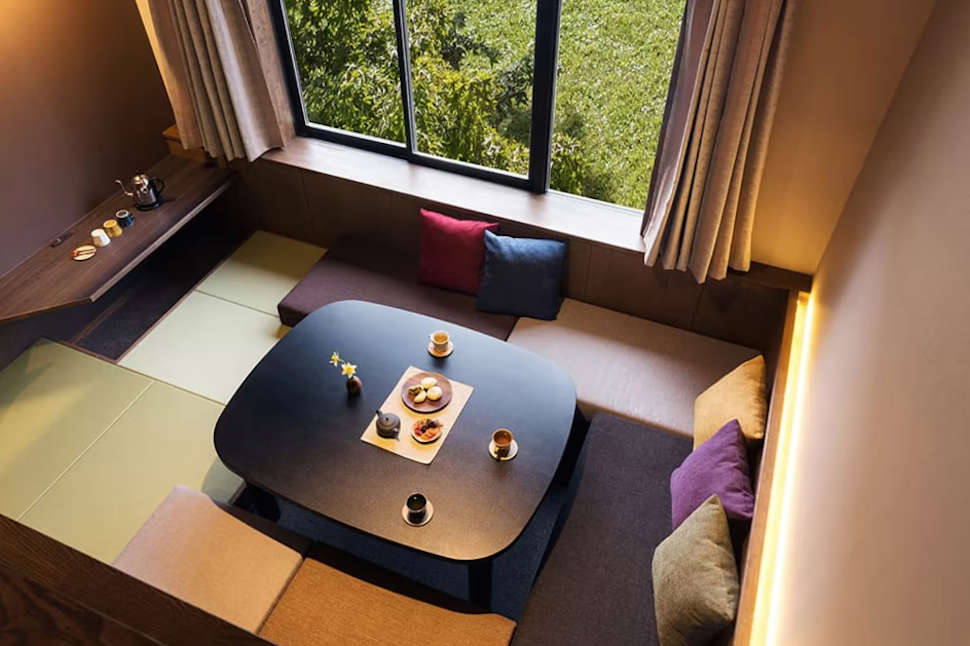
The guest rooms extend that conversation in a quieter register. KAI Signature Rooms introduce regional craft through materials and details that reward attention rather than demand it. The hotel describes work by a local kiri-e artist, whose intricate paper-cutting brings graphic delicacy to the interiors, alongside lanterns fashioned from Matsusaki washi paper. Both have an immediate visual appeal, but their greater significance is that they connect the private space of the room to the skills of makers outside the hotel.
Paper is an especially expressive material in Japanese interiors. Its surface changes the quality of light, softening the edges of a room and making even a simple lamp feel carefully considered. Cut-paper art works differently: it turns absence into a design element, using the spaces between forms to suggest a landscape, an object or a movement. Together, such details create an atmosphere without the need for elaborate ornament.
The appeal of a ryokan room also lies in the way it encourages a change of pace. The transition from shoes and outerwear to indoor comfort, from the day’s journey to a cup of tea, is part of the experience. KAI Alps does not ask guests to live as residents of a historic farmhouse. It offers the more useful pleasure of recognising how a region’s traditions can still influence a well-designed contemporary interior.
For international travellers, this kind of specificity is increasingly valuable. Generic luxury can be reproduced almost anywhere; local craft cannot be separated so easily from the people, materials and histories that produced it. At its best, the room becomes a small introduction to Nagano before the visitor has even stepped back outside.
The Mountain Landscape on the Table
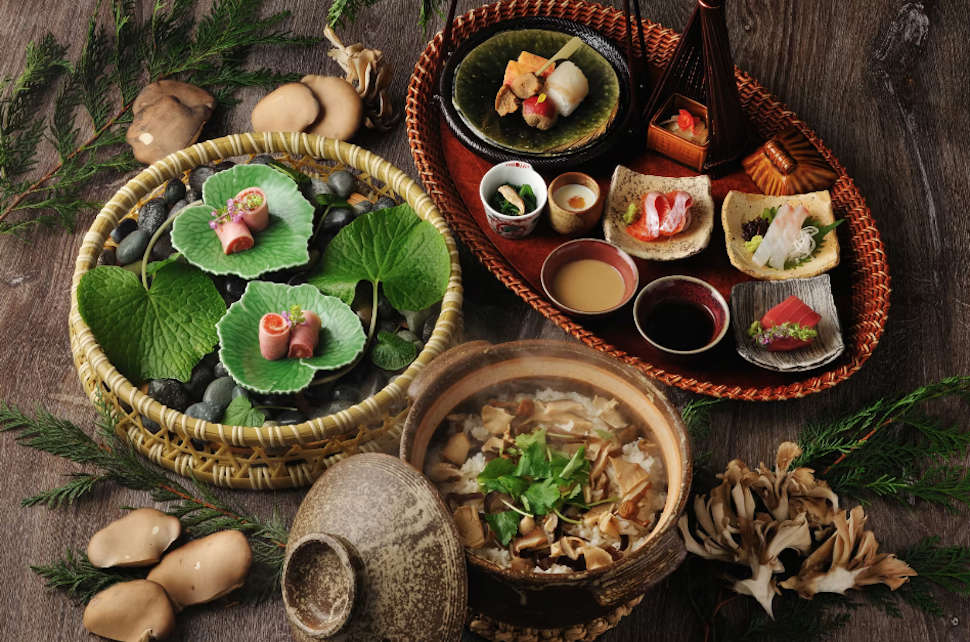
Dinner brings the geography into sharper focus. KAI’s approach to kaiseki is built around a sequence of dishes that express the season and the local area. At KAI Alps, the most memorable example is a hot pot known as yuki-nabe, or snow pot. A cloud of cotton candy sits above the ingredients; when hot broth is poured in, the sweetness dissolves, recalling snow disappearing with the arrival of spring. It is a playful piece of presentation, but the idea is grounded in a landscape where the changing snowline is part of the annual calendar.
The wider meal draws on the ingredients and cooking traditions of Shinshu. Nagano’s reputation for soba, mountain vegetables and wasabi offers a useful cultural context, though individual dishes and menus change. That seasonal variation should be seen as a strength rather than an inconvenience. A kaiseki dinner is not designed to remain identical throughout the year. Its purpose is to make the present moment legible through flavour, temperature, colour and texture.
The ritual of the meal matters as much as the showpiece dish. Courses arrive in an order that creates anticipation without haste. A preparation may be delicate, another deeply warming; one emphasises the clean flavour of an ingredient, another the savoury depth of a broth. The experience asks diners to notice differences that a hurried restaurant visit might flatten. In a mountain ryokan, after an afternoon outdoors or in the baths, that attention feels particularly appropriate.
It would be easy to describe this as comfort food elevated to luxury, but the phrase misses the point. The sophistication lies not in disguising humble regional references but in presenting them with care. The snow pot’s disappearing cloud may be theatrical, yet the strongest impression is of a cuisine that knows exactly where it belongs.
An Evening Beside the Irori
Later in the day, the hearth becomes a meeting place. KAI Alps offers a cultural discovery experience around the irori, introducing guests to snacks, warmed local sake and traditional games. The hotel also lists oyaki, the filled dumplings closely associated with Nagano, among the foods served during its afternoon programme. These are small encounters, not a claim that a brief activity can convey an entire regional history. Their value is in giving the visitor an accessible starting point.
The setting changes the character of hospitality. In a conventional hotel lounge, people often remain in separate groups, absorbed in their own conversations. A shared hearth gives the room a natural focus. There is something gently democratic about watching food being warmed over a fire: the action belongs to everyone present, even if no one says much. For visitors unfamiliar with the customs of rural Japan, the experience can be more illuminating than a lengthy explanatory display.
The hotel’s wider cultural programme includes an introduction to onsen customs through kamishibai, a traditional form of illustrated storytelling. The presentation offers a way into the history of Omachi’s hot springs before guests enter the baths themselves. This is a thoughtful sequence. Rather than treating bathing as another amenity on a facilities list, it places the practice in a social and historical context.
The programme also suggests why a stay here is best approached without an overfilled itinerary. There is plenty to do beyond the property, but the small rituals inside it are not incidental extras. They are among the reasons to choose a ryokan in the first place.
Water, Forest and the Onsen Ritual
The baths draw their water from Kuzu Hot Spring, according to the hotel, and open the experience towards the surrounding mountains and Japanese larch trees. The contrast is elemental: cool air, warm water, the texture of wood and stone, and a landscape that does not need embellishment. An onsen is often described in terms of relaxation, but that word alone scarcely captures its cultural role. Bathing is also a matter of preparation, etiquette, shared space and an unhurried relationship with the body.
Guests new to Japanese hot-spring culture benefit from understanding the basics before entering. Washing thoroughly before soaking is fundamental, as is respecting the rules of the particular bath. The aim is not performance but consideration for other bathers. KAI Alps’ storytelling introduction helps make those conventions less intimidating while keeping the experience rooted in local tradition.
The visual drama changes with the seasons. Snow can turn the surroundings almost monochrome; autumn gives the larches a different palette; summer restores the density of green. None of this requires the hotel to promise a particular view on a particular day. Weather is part of mountain travel, and the most rewarding stays allow room for its unpredictability. A misty afternoon can be as memorable as a clear one.
Wellness here is therefore less about an exhaustive menu of treatments than about repetition and rhythm: bathe, rest, eat, sleep, and begin again. Massages are available, but the central luxury is the freedom to devote time to something apparently simple. The result can feel unusually restorative precisely because it does not insist on constant novelty.
Beyond the Ryokan: Hakuba and the Northern Alps
KAI Alps also works as a base for exploring a remarkable part of Japan. Omachi is connected to the Hakuba area, known internationally for its winter sports and its role in the 1998 Nagano Winter Olympics. The ryokan provides facilities for ski equipment, making a mountain day compatible with an evening of bathing and kaiseki dining. Ski conditions and resort operations naturally depend on the season, and journeys should be planned with the weather in mind.
Another celebrated excursion is the Tateyama Kurobe Alpine Route, whose combination of mountain transport and dramatic scenery has made it one of the region’s best-known journeys. Its operating season and individual transport services need checking before departure; this is not a year-round road trip that can be improvised at any moment. Travellers who prefer a slower programme can focus instead on Omachi, local landscapes and the changing life of the foothills.
Access is straightforward enough to make the property attractive beyond a specialist mountain audience. The hotel places itself roughly fifteen minutes by taxi from JR Shinano-Omachi Station, while buses connect the area with Nagano. Winter travel deserves additional planning: the official guidance specifies winter tyres for drivers and lists a seasonal, reservation-only shuttle for the 2026–27 winter period. Those practical details are not glamorous, but in mountain country they are part of travelling well.
What makes the location appealing is the choice it allows. One guest may spend the day skiing; another may follow a scenic route; a third may decide that the best excursion is no excursion at all. The ryokan does not lose its identity when guests remain within its walls. On the contrary, the landscape is present in the architecture, food and bathing rituals even when the mountains are viewed only from a window.
A Luxury Measured in Attention
The most persuasive aspect of KAI Alps is its refusal to separate comfort from context. Many mountain hotels can offer a beautiful setting, and many contemporary ryokan provide elegant rooms and excellent bathing facilities. Here, the details point consistently towards Shinshu: the protected winter passage, the hearth, the craft paper, the hot pot that imagines melting snow, the storytelling that precedes the onsen. Each element reinforces the others.
That coherence is what distinguishes a memorable stay from a collection of amenities. It gives guests a vocabulary for understanding the place, even if they arrive knowing little about Nagano. A bowl of food becomes more interesting when its form recalls the mountains outside; a lamp acquires significance when its paper comes from a regional tradition; a shared fire becomes more than an atmospheric accessory when people gather around it.
There is no need to romanticise hardship or pretend that the past was simpler. Rural life in a snowy region demanded resourcefulness and work. The achievement of KAI Alps is to recognise the beauty in some of those practical responses and carry them into the present. Luxury, in this setting, is not excess. It is the time and attention required to notice what makes a place different.
For travellers seeking Japan beyond its major cities, the ryokan offers a particularly satisfying proposition: the grandeur of the Northern Alps paired with the intimacy of an old domestic ritual. The mountains supply the scale. The hearth supplies the human measure.
Practical Information
KAI Alps
⌖ 2884-26 Taira, Omachi, Nagano 398-0001, Japan
☎ +81 50-3134-8096