Zagreb’s grand railway-era hotel
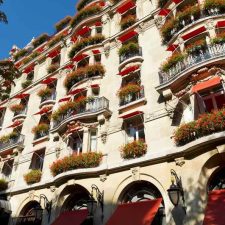
The Esplanade Zagreb Hotel is best approached with an understanding of the journey that brought it into being. It stands near the Croatian capital’s main railway station, on Mihanovićeva Street, at the edge of the green sequence of squares that gives central Zagreb much of its character. The location is no accident. A century ago, international rail travel was changing the way Europeans encountered one another, and Zagreb wanted an address equal to the expectations of passengers associated with the Orient Express. The result was a hotel designed to be both an arrival point and a statement of urban ambition.
The Esplanade opened on 22 April 1925. Its centenary in 2025 celebrated more than the survival of a handsome building: it marked one hundred years of hospitality, social change and the sometimes turbulent history of the region. The hotel has passed through different political eras and economic systems while retaining its place in the city’s public imagination. Its importance is not reducible to a famous guest list. For generations of Zagreb residents, the Esplanade has been a setting for occasions that mattered, from formal celebrations to the simple ritual of meeting for coffee.
That double identity makes the property unusually rewarding. International visitors can enjoy the scale and service of a grand hotel, while the building remains recognisably part of Zagreb. It does not attempt to create a sealed-off resort experience. Its rooms and restaurants offer refuge, but the city is never far away. The best way to understand the Esplanade is to see it as a threshold between the historic culture of European travel and a capital that continues to reinvent itself.
The Orient Express and the architecture of ambition
The hotel’s origins are documented with uncommon precision. As the city expanded in the early twentieth century, existing accommodation was considered inadequate for a growing international clientele. An architectural competition was launched in 1917. The German architect Otto Rehnig’s proposal was selected, but the plans were subsequently revised by Croatian architect Dionis Sunko, whom the hotel credits with the completed design. Construction took just 26 months, a remarkable pace for a building of this ambition.
The finished hotel combined the ceremonious language of a European palace with the practical innovations expected by travellers of its day. At the opening, guests could find approximately 200 rooms with running hot and cold water, telephones and a substantial range of public spaces. Its dining rooms served dishes reflecting the Central European tastes of the period. Such details now sound ordinary, but they represented a confident expression of modern comfort in 1925.
The Esplanade is regularly described as an Art Deco landmark, although its architectural language also belongs to the broader Belle Époque tradition of grand urban hotels. This is not a contradiction to be resolved by a single label. The exterior has a formal elegance, while the interiors and subsequent refurbishments express changing ideas of modern luxury. What matters is the relationship between the architecture and its purpose: the building was made for arrivals, encounters, celebrations and the sense of occasion that international travel once carried almost automatically.
The Orient Express connection remains an essential part of the story, but the hotel is more than a nostalgic railway souvenir. Its continued use demonstrates how a building designed for one era of mobility can remain relevant when travellers arrive by aircraft, car or modern train. The station is still close; the city’s cultural life has become the greater reason to stay.
 @ Esplanade Zagreb Hotel
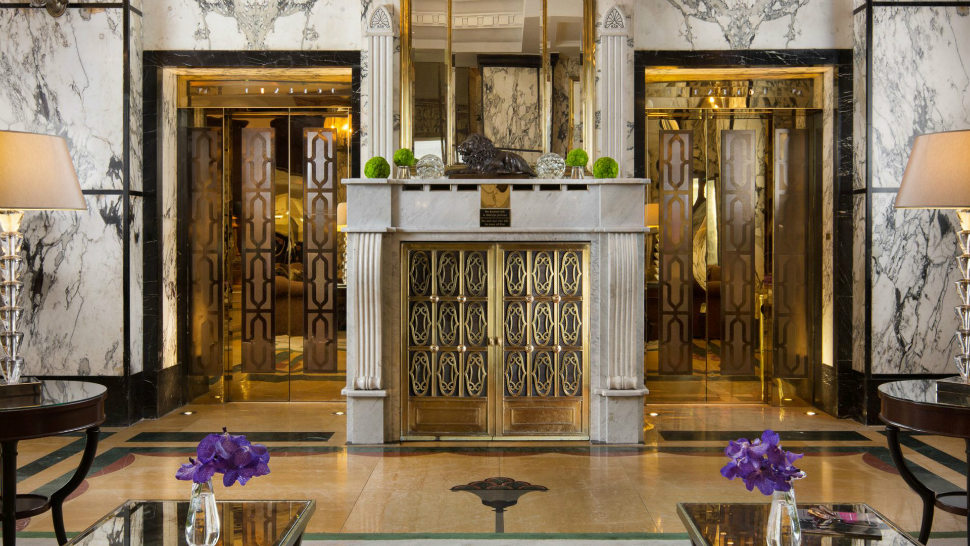
A ballroom, a lobby and a city’s social memory
The Emerald Ballroom has long been one of the hotel’s defining spaces. Its proportions and decorative character recall a time when a grand hotel was expected to provide a public stage for a city’s most significant gatherings. The Esplanade’s history includes gala dinners, dances, diplomatic occasions and the social rituals of a capital whose place in Europe was continually being negotiated.
The hotel’s own archive records celebrated visitors, including Josephine Baker and Charles Lindbergh. Those names are part of the property’s history, but they should not obscure the less visible people who made the institution work. Porters, cooks, waiters and reception teams carried the standards of hospitality through periods when the city itself was changing dramatically. In a historic hotel, continuity is as much a human achievement as an architectural one.
The building also has a difficult wartime history. According to its official chronology, it was used by German military and security authorities during the Second World War. After the war, it experienced years of austerity, including a period when its dining facilities served a public need rather than a glamorous clientele. A responsible account of the Esplanade must include these chapters. They prevent the hotel’s past from becoming a seamless fantasy of chandeliers and famous visitors.
In 2002 the property closed for a major refurbishment, reopening in 2004 after a substantial programme of restoration and redesign. The work gave the historic hotel a new operational life without abandoning the atmosphere that had made it recognisable. Since 2012 it has operated independently. That combination of continuity and adaptation is one of the most persuasive aspects of the present-day experience.
Rooms that belong to a grand-hotel tradition
The hotel currently lists 208 rooms and suites, a scale large enough to serve major international events but still rooted in the identity of one historic building. Its accommodation combines generous proportions, contemporary conveniences and a decorative sensibility intended to complement the architecture. The hotel’s published specifications describe marble bathrooms with heated floors and mirrors, along with modern connectivity and entertainment facilities.
For travellers, the most important choice is not simply between a room and a suite, but between different ways of using the hotel. A short cultural visit may call for a comfortable base from which to explore the city on foot. A longer stay or a special occasion may justify additional space. As with any historic property, room layouts and outlooks can differ; the category descriptions should be checked carefully before booking rather than assuming that every room has identical proportions or views.
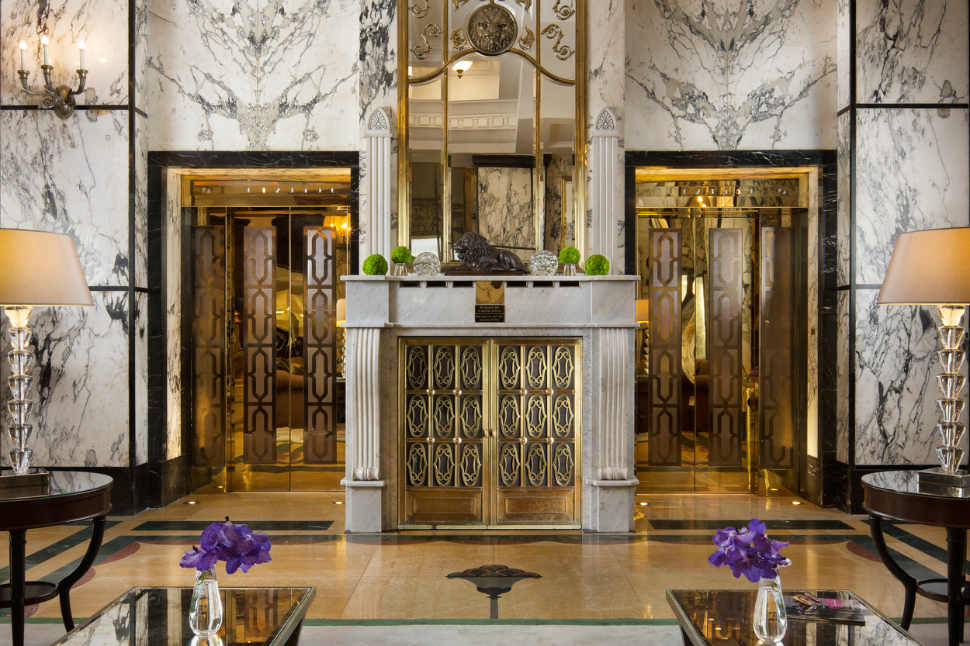
The appeal of staying here lies partly in the transition from public grandeur to private calm. After the scale of the lobby and the formality of the principal rooms, a guest room provides a more intimate encounter with the hotel’s style. There is pleasure in the familiar choreography of a well-run establishment: returning from a day in the city, setting aside a coat and deciding whether the evening should begin downstairs or somewhere beyond the hotel doors.
Luxury in this setting is not only a matter of decorative finish. It is the confidence that an established hotel knows how to accommodate different rhythms of travel. The Esplanade’s history gives that promise unusual weight, although the quality of any individual stay ultimately depends on the people delivering the service.
 @ Esplanade Zagreb Hotel
Zinfandel’s and the contemporary Croatian table
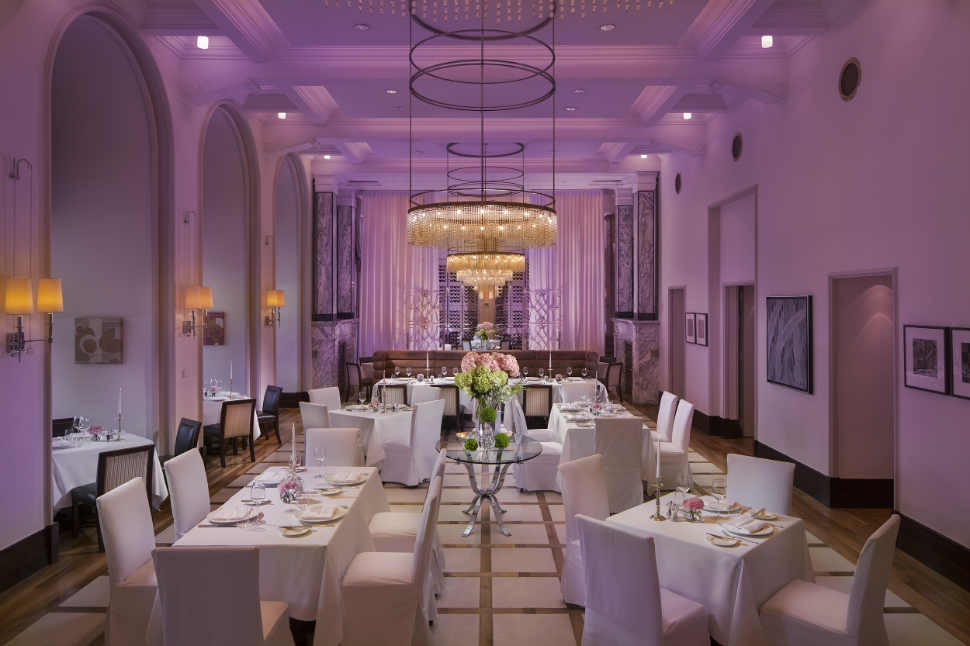
Food is central to the Esplanade’s identity. Zinfandel’s, the hotel’s fine-dining restaurant, takes its name from a grape with an intriguing transatlantic story: genetic research has linked California’s Zinfandel to Croatian grape varieties. The name is an apt expression of a hotel whose history has always involved international exchange. The restaurant’s cooking places Croatian ingredients and culinary traditions in a contemporary European setting.
The hotel’s culinary programme has been closely associated with chef Ana Grgić Tomić, who became its first female executive chef in 2012. Her work has helped shape the restaurant’s modern reputation, connecting an established dining room to changing expectations around seasonality, presentation and the interpretation of local produce. Menus inevitably evolve, so the strongest reason to visit is the kitchen’s approach rather than any one dish preserved in an old review.
Zinfandel’s is not the only dining experience. Le Bistro offers a more informal register, combining Croatian specialities with the habits of a classic European bistro. The hotel’s štrukli, a traditional dish associated with the Zagreb and Zagorje regions, is among the local tastes for which the property is known. The Esplanade 1925 Lounge & Cocktail Bar provides a setting for an aperitif or a meeting, while the Oleander Terrace brings outdoor dining into the warmer months.
Together these venues explain why the hotel remains a social address for the city, not simply a place where overnight guests eat. A grand hotel is most alive when its public rooms belong, at least in part, to the people around it. At the Esplanade, gastronomy continues to make that connection tangible.
 @ Esplanade Zagreb Hotel
The Oleander Terrace and the rhythm of Zagreb
The Oleander Terrace has an established place in the hotel’s mythology. Outdoor hospitality is especially attractive in Zagreb, where the culture of sitting over coffee is an essential part of urban life. A terrace allows visitors to experience the city at a different pace from the itinerary of monuments and museums. It makes room for conversation, observation and the unhurried passage of an afternoon.
The Esplanade’s setting also encourages exploration beyond the building. Zagreb’s central sequence of parks and squares, often called the Green Horseshoe, connects gardens, cultural institutions and elegant nineteenth-century streets. The nearby Art Pavilion and the routes leading towards Ban Jelačić Square provide an introduction to a city whose architectural character is more varied than first impressions might suggest.
The Upper Town offers another atmosphere, with historic streets, civic landmarks and views over the lower city. Markets, museums, cafés and independent shops add everyday texture to the visit. Zagreb is not a city that requires a rigid checklist to be enjoyable. Its pleasures often lie in the movement between neighbourhoods, the encounter with a small gallery or the discovery of a café worth revisiting.
A stay at the Esplanade makes this style of travel easy. The hotel is close to transport connections, yet the central streets are inviting enough to reward walking. It is possible to spend the morning among the city’s landmarks and return for a late lunch, then set out again when the light and mood have changed.
A century that was not always glamorous
The temptation with a centenarian hotel is to treat its history as an uninterrupted procession of glamour. The Esplanade’s record is more complicated, and therefore more interesting. The building has witnessed war, the transformation of Yugoslavia, Croatian independence and the country’s subsequent integration into European institutions. Its function has changed with those events, sometimes dramatically.
During the 1990s, Zagreb experienced the pressures and uncertainty of war in the region. The hotel continued to operate through a difficult period, receiving journalists and other visitors. These episodes belong to the story as surely as the balls and famous guests of earlier decades. They explain why the property can mean different things to different generations of residents.
The refurbishment of the early 2000s marked another decisive moment. The hotel was not preserved as an inert monument; it was adapted for contemporary travel, with renewed dining venues and updated accommodation. That decision helped ensure that its architectural identity remained visible through active use. The hundredth anniversary in 2025 was therefore a celebration of endurance as much as style.
To appreciate the Esplanade fully is to recognise this mixture of ceremony and resilience. Its elegance has survived because the institution has repeatedly found ways to remain useful to its city. That is a more substantial achievement than the preservation of an attractive façade.
A living landmark, not a museum piece
The Esplanade Zagreb Hotel remains one of the most convincing examples of the grand-hotel tradition in this part of Europe. It has a strong sense of arrival, a documented architectural history, restaurants with their own following and an address that makes the capital accessible. Those qualities would be attractive in any city. Here they gain significance from the hotel’s unusually close relationship with Zagreb’s social and political history.
The property suits travellers who want their accommodation to contribute to their understanding of a destination. Architecture enthusiasts can examine the way early twentieth-century ambitions were translated into a major hotel. Food-minded visitors can use its restaurants as an introduction to contemporary Croatian hospitality. Those simply looking for a comfortable city stay will appreciate the central location and the possibility of returning to a place with a recognisable identity.
A century after its opening, the Esplanade does not need to rely entirely on the romance of the Orient Express. The railway story explains why the hotel was built; its continuing relevance explains why it matters. The most memorable experience is not a journey back to 1925, but the sense of staying in a building that has accompanied Zagreb into the present.
That is the particular pleasure of a great historic city hotel. It offers an elegant place to sleep, eat and meet, while the city beyond the doors supplies a much larger story. At the Esplanade, the two remain inseparable.
Hotel Information
Esplanade Zagreb Hotel
Mihanovićeva ulica 1, 10000 Zagreb, Croatia
Official website: esplanade.hr
Tags: Art Deco, Croatia, Esplanade Zagreb Hotel, Historic Hotels, Luxury Travel, Orient Express, Zagreb