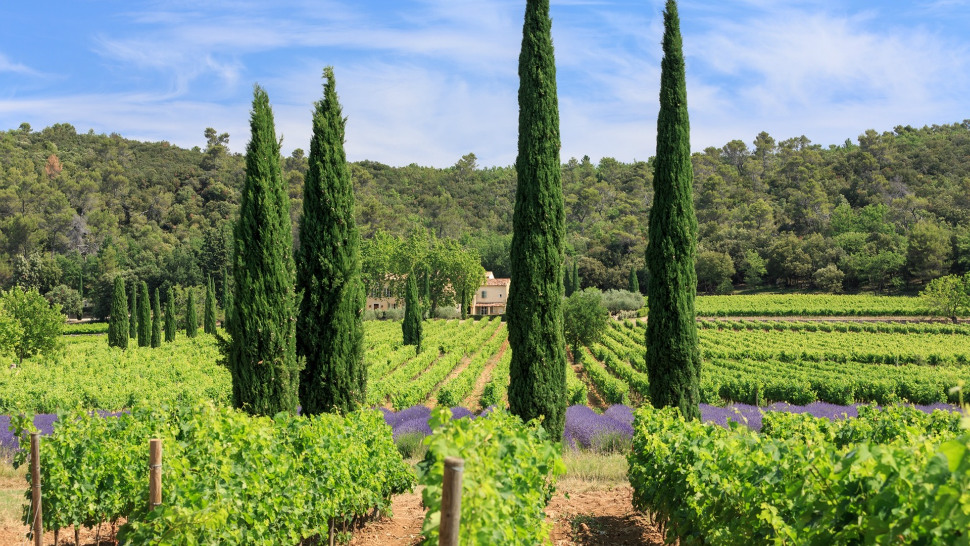
A vineyard in the hills of Pontevès
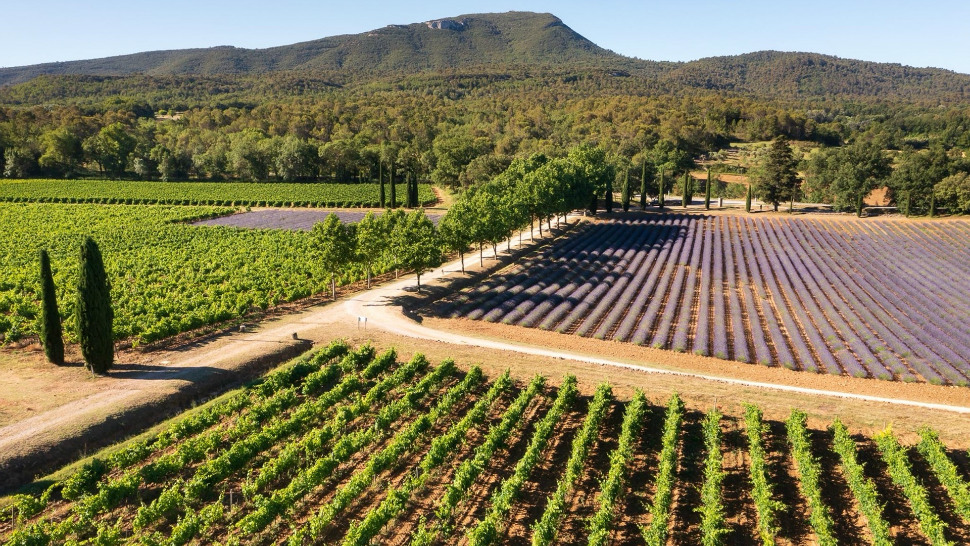
In the Provençal imagination, wine country often begins with a familiar palette: sunlit stone, lavender, olive trees and vineyards rolling towards a blue horizon. Château La Calisse occupies a less predictable part of that landscape. Near Pontevès, in the hills of the Haut-Var, the estate belongs to the higher, cooler territory of Coteaux Varois en Provence. The Mediterranean is part of the region’s identity, but here altitude, limestone and the temperature of the night are as important to the story as sunshine.
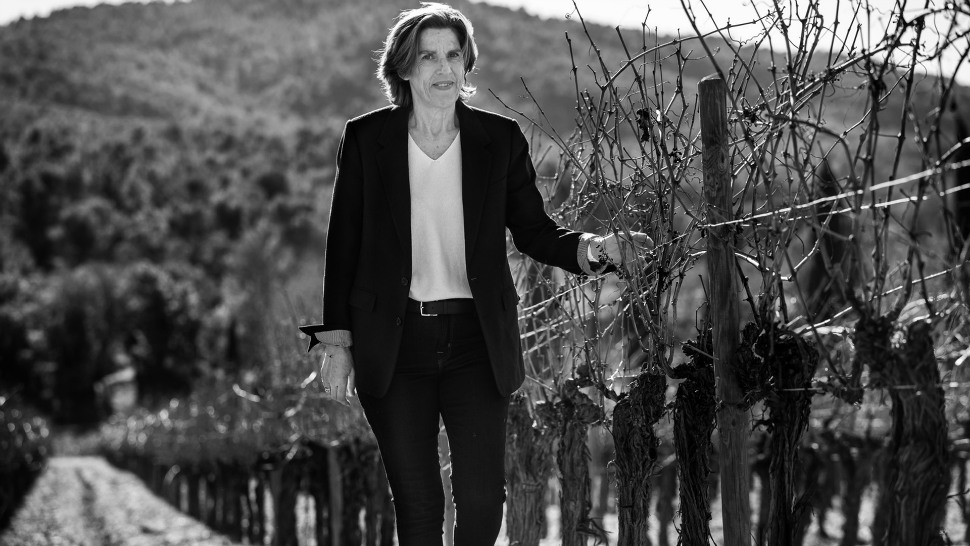
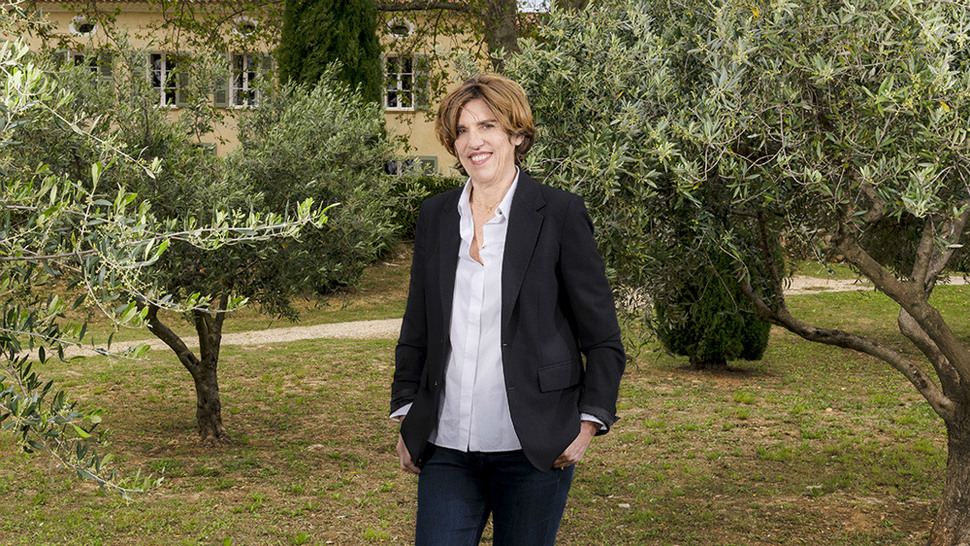
The person who brought the property back to life was not born into a dynasty of winemakers. Patricia Ortelli studied philosophy and art history at the École du Louvre before turning to a former silk farm in 1990. Her decision was as radical as it was personal. She acquired a place whose vineyard needed to be reconstructed, then set about learning the work of vines, soils and harvests. The estate’s history is therefore not one of inherited continuity but of an identity patiently created.
There is a revealing connection between her earlier discipline and her subsequent profession. A trained eye for art does not automatically confer knowledge of viticulture; growing grapes is a practical craft that demands seasons of observation. Yet the attention to material, structure and detail that belongs to restoration offers a useful way to understand Ortelli’s approach. At La Calisse, the vineyard was not simply preserved. It was examined, reworked and given a new purpose.
Today the estate produces white, rosé and red wines, a breadth that challenges the habit of reducing Provence to one colour. Its identity is grounded in organic farming, hand harvesting and a conviction that the Haut-Var deserves to be understood as a serious wine landscape in its own right.
From a silk farm to a vineyard
The story begins with a magnanerie, the type of rural building once used for silkworm cultivation. The estate also had almond trees, whose harvest, according to the property’s account, supplied confectioners making calissons in Aix-en-Provence. The name La Calisse preserves that connection to a different agricultural economy. Before wine became its defining product, this land had already participated in the complex working life of Provence.
Ortelli bought the property in 1990 and undertook extensive drainage, levelling and replanting. The first vintage followed in 1993. It was an early milestone rather than an instant triumph: the estate’s own historical narrative presents that first wine with refreshing modesty. The more significant achievement was the persistence required to develop a consistent style over subsequent years. A vineyard cannot be perfected in a single renovation campaign. Its character emerges through the accumulated experience of weather, pruning, ripeness and countless decisions made long before a bottle is opened.
The scale of the project has changed. The estate’s current history describes an expansion from twelve to twenty-eight hectares, supported by neighbouring vineyards added in 2024. Older profiles, including the original version of this feature, referred to a substantially smaller vineyard. Those figures describe different moments in its development and should not be confused. A new cellar accompanied the recent growth, while the estate says it continues to balance its production across whites, rosés and reds.
The family story has also evolved. Ortelli’s son Étienne now participates in the project, bringing a second generation into what began as a solitary undertaking. The estate remains independently directed, according to its own account. That continuity matters more than a romantic image of the lone vigneronne: the original vision has acquired the structure needed to survive and develop.
Altitude as an ingredient
La Calisse is situated in the elevated hinterland rather than on the coastal plains. The estate’s own descriptions give approximate elevations ranging from 380 to 450 metres, reflecting the contours of the property and its surroundings. The exact figure is less important than the climatic consequence. Warm days are tempered by cooler nights, which can help grapes retain acidity and aromatic definition as they ripen.
Limestone is another part of the estate’s identity. It shapes the soils and their relationship with water, while the surrounding garrigue places the vines in a landscape of wild herbs and dry Mediterranean vegetation. These conditions do not produce a single automatic flavour; wine is always the result of a particular season and the decisions of those working the land. But they help explain why the estate speaks of freshness, tension and precision as desirable qualities.
The rewards come with risks. Higher sites can be vulnerable to spring frost, and the estate acknowledges that lower yields are part of the economic reality of farming here. That is an important counterpoint to the easy assumption that a beautiful vineyard landscape must also be a simple place to make wine. The physical character of the Haut-Var asks for adaptation rather than formula.
To visit this part of Provence is to encounter a different rhythm from the crowded summer coast. The villages, agricultural land and wooded hills are not merely a backdrop for a tasting. They are the context in which the wines make sense. La Calisse is best understood not as an isolated luxury product but as one expression of a living rural territory.
Organic before it became a selling point
Château La Calisse obtained organic certification through Ecocert in 1996, a notably early commitment in the appellation. Today, when organic credentials are common across many wine regions, it is easy to overlook the practical significance of such a decision three decades ago. The estate describes a period when there was little local infrastructure or established demand to support the approach. It chose the method before there was a clear commercial advantage in doing so.
Its published commitments describe grassed rows, attention to living soils and the use of copper and sulphur in place of synthetic chemical treatments. The vineyard is monitored plot by plot rather than treated according to a rigid calendar. Organic certification should not be mistaken for an absence of intervention, and the environmental questions surrounding any form of viticulture remain complex. What matters here is the documented continuity of the estate’s chosen farming system and the practical work required to maintain it.
Harvesting is carried out by hand. The property emphasises the ability to sort bunches as they are picked and to bring intact fruit to the cellar in open crates. This is especially relevant for delicate white grapes, for which fruit condition and handling can influence the clarity of the resulting juice. Manual harvesting is labour-intensive, but it also gives the team close contact with the crop at a decisive moment.
Such decisions are rarely visible to someone encountering the finished bottle at a restaurant table. They belong to the long preparation behind a harvest: soil management, observation, restraint and the willingness to accept the limits imposed by a particular year. They are also why the estate’s organic history deserves more attention than a label alone can convey.
Three colours, distinct ambitions
Provence’s international reputation has been transformed by rosé, but La Calisse insists on a more complete portrait of the region. Its present range includes white wines based on Rolle, also known as Vermentino, alongside Grenache Blanc and Clairette; rosés drawing on Grenache Noir and Syrah; and reds built from varieties including Syrah, Grenache Noir and Cabernet Sauvignon. The composition varies by cuvée, and the estate’s current catalogue is the appropriate reference for individual blends.
The whites are particularly revealing of the high-altitude setting. Rolle can offer aromatic breadth without sacrificing freshness when the fruit is carefully grown and handled. The estate describes wines that seek both expression and precision, and its white selections have received recognition in French wine guides over the years. Those distinctions are evidence of a sustained ambition rather than a substitute for tasting the wines themselves.
The rosés are conceived as wines for the table, not simply as pale seasonal refreshments. The property describes gentle extraction, low-temperature fermentation and careful attention to fruit. Syrah and Grenache bring different structural possibilities, while the winemaking aims to preserve definition. The result is a category with room for serious gastronomic interest, particularly when matched with the vegetables, seafood and aromatic cooking of southern France.
The reds add another dimension. Depending on the cuvée, the estate employs extended maceration and oak ageing for wines intended to develop over time. Here again the point is variety of expression rather than a universal house recipe. The range includes the Château La Calisse, Patricia Ortelli and Étoiles labels, with Fleur among its white cuvées. Each has its own place in the estate’s presentation, allowing a visitor to compare styles rather than reduce the vineyard to a single signature bottle.
The cellar as a place of decisions
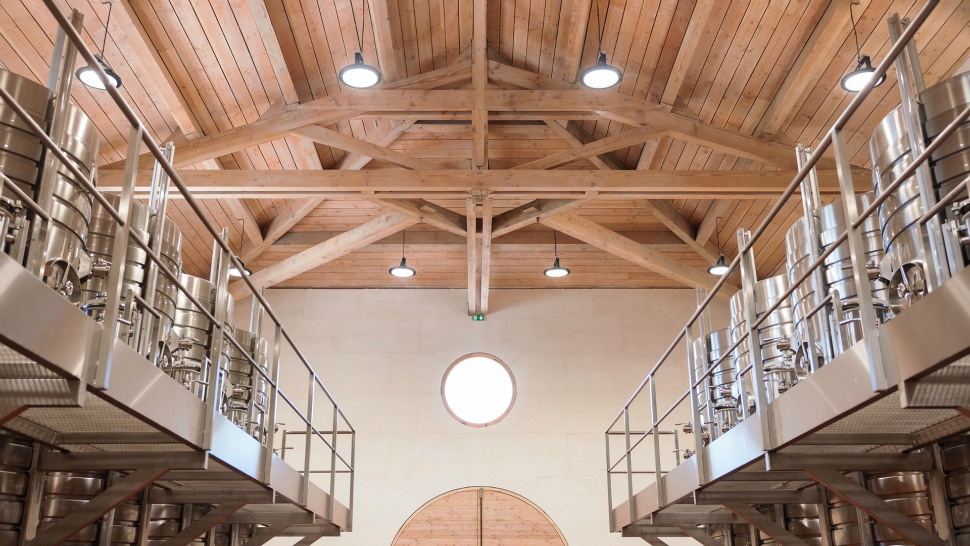
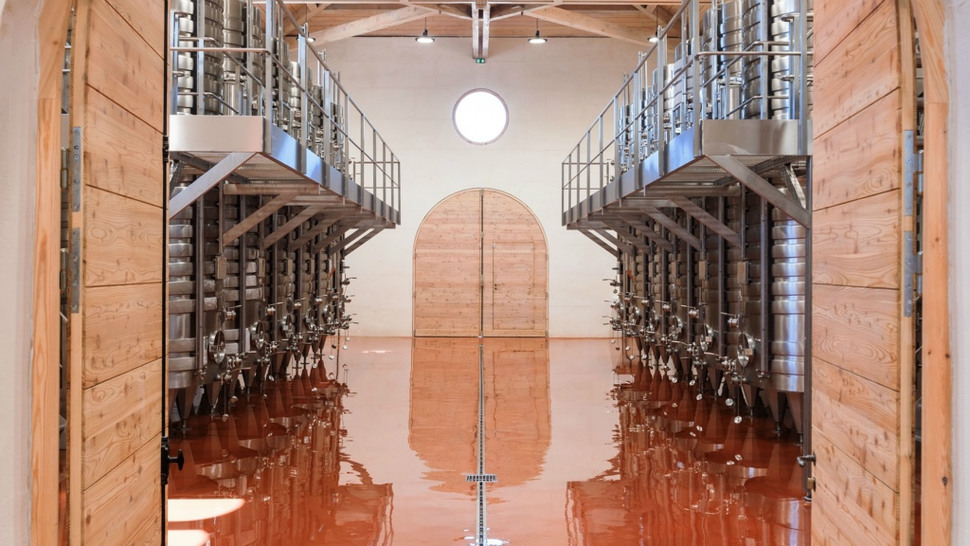
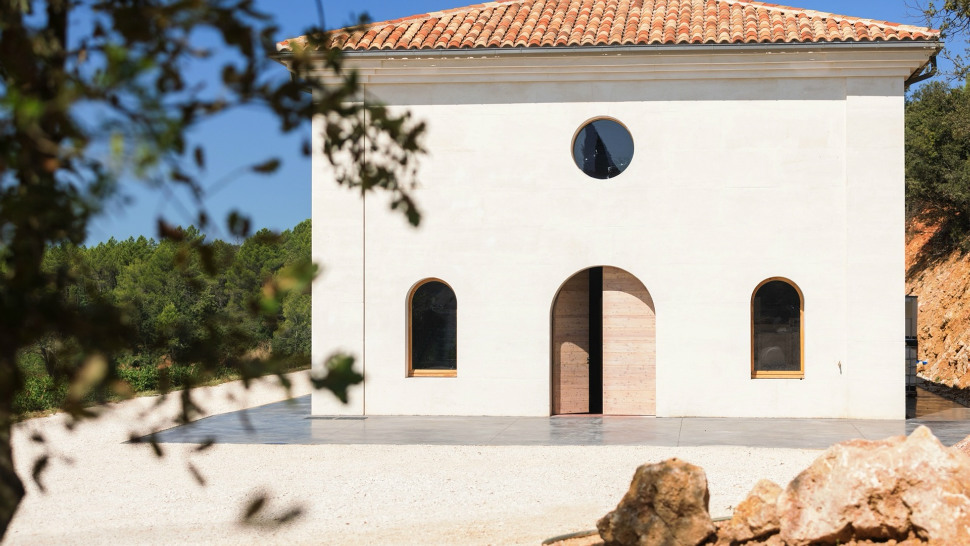
A vineyard’s public image often centres on its rows of vines, yet the cellar is where many of the year’s most consequential choices become irreversible. At La Calisse, the recent construction of a new winemaking facility accompanied the expansion of the vineyard. The investment reflects a practical need: more fruit requires suitable space, equipment and an organisation that can preserve the precision sought in the field.
The estate’s descriptions of its wines refer to low-temperature fermentation for whites and rosés, gentle extraction and different ageing methods according to the intended style. These are not exotic techniques in themselves. Their significance lies in their application to fruit from a particular site and in the consistency with which they support the house’s goals. A white wine intended to retain freshness asks different questions of the winemaker from a red selected for long ageing.
There is a useful parallel with Ortelli’s art-historical background, provided it is not pushed too far. Winemaking is neither painting nor sculpture, and a vineyard cannot be controlled like a studio. But both disciplines require judgement about when to intervene and when to leave the material alone. The best decisions often appear effortless only because the preparation has been so thorough.
Visitors interested in the craft should look beyond the romantic architecture of the cellar and ask about the sequence of work: how fruit is selected, how individual parcels are treated, and how the character of each vintage affects the finished wine. Those questions bring the story of La Calisse closer to its real subject: the patient translation of agricultural conditions into a drink that can travel far beyond Pontevès.
A reputation built over vintages
Recognition did not arrive in a single dramatic moment. The estate’s history describes growing attention from the Guide Hachette, national publications and international customers during the years from 2000 to 2015. Its published awards archive lists distinctions for whites, rosés and reds across numerous vintages, including medals from the Concours Général Agricole and other French competitions. The details are extensive, but their cumulative meaning is clear: the estate has worked to establish credibility across several wine styles.
Awards should always be read with care. A medal belongs to a particular wine and vintage, not automatically to every bottle bearing the estate’s name. Likewise, a guide mention is not a guarantee that a wine from a different year will taste identical. What the historical record can show is persistence: the willingness to submit wines for outside evaluation and to refine the work over time.
There is also a wider story here about the perception of Provence. For decades, the region was often discussed internationally through a narrow set of holiday associations. Estates such as La Calisse have helped demonstrate the range of its agricultural and gastronomic possibilities. The inland Var can produce whites with energy, rosés with purpose and reds with structure. These are not exceptions to the region’s identity; they are part of its richness.
The estate’s independent position adds another dimension. In a market where vineyard ownership and brand consolidation attract increasing attention, La Calisse presents itself as a family-led enterprise that has chosen to retain control over its decisions. That does not make independence an automatic guarantee of quality, but it helps explain the continuity of the project’s direction.
The visit and the wider landscape
Château La Calisse welcomes visitors to its tasting room throughout the year and offers estate visits by appointment, according to its current website. Those arrangements should be checked before setting out, especially for travellers planning a specific tasting or hoping to explore the vineyard and cellar in depth. The most rewarding visit is one that allows time for conversation about the wines, not merely a hurried purchase between other stops.
Pontevès lies in a part of Provence that encourages slower exploration. The hills of the Haut-Var, its small villages and its agricultural landscape offer a counterpoint to the coastal image of the region. A journey here can be organised around local markets, country roads and the changing appearance of the vineyards through the seasons. The character of the place is not dependent on peak summer: spring, harvest time and the quieter months each reveal different aspects of rural life.
A tasting across the estate’s three colours is especially instructive. It makes the relationship between site and winemaking easier to consider, while revealing how a single producer can pursue contrasting textures and styles. Visitors need not arrive with specialist vocabulary. Curiosity about the landscape, the grape varieties and the choices made in the cellar is more than enough to begin.
There is no need to dress the experience in invented scenes of a personal visit. The documented facts are compelling on their own: a former silk farm, a vineyard reconstructed by a woman trained in art history, an early organic commitment and a second generation now involved in its future. Together, they provide a portrait of Provence that is both distinctive and grounded.
A life’s work, still evolving
Thirty-five years after Patricia Ortelli first committed herself to this hillside property, Château La Calisse remains a work in progress. That is not a weakness but the nature of viticulture. Every season presents new weather, new risks and new opportunities to understand the land. Even an established estate cannot repeat a successful vintage by following a fixed script.
The addition of neighbouring vineyards and the arrival of a new cellar show that the project has not been frozen in the image of its beginnings. Nor has it abandoned the commitments that gave it an identity. Organic farming, manual harvests and the ambition to make whites, rosés and reds of equal seriousness continue to define the estate’s public account of its work.
Its story offers a useful alternative to the familiar language of luxury wine. Prestige here is not primarily a matter of spectacle or an imposing château façade. It lies in the long accumulation of agricultural knowledge and in the determination to let a particular piece of Provence speak through its wines. The former silk farm has become a place where landscape, family history and technical craft meet.
For the traveller willing to venture beyond the coast, that is reason enough to discover La Calisse. It is an invitation to understand Provence not simply as scenery, but as a place where people make enduring choices about the land they cultivate.
Practical Information
Château La Calisse