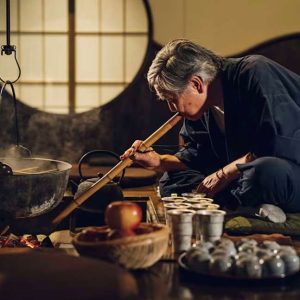
Kyoto beyond the familiar image
Kyoto reveals itself through thresholds. A busy avenue gives way to a lane edged with timber façades; a shopfront opens onto a small garden; beyond a temple gate, the traffic seems to belong to another century. The city is neither a museum nor an exercise in nostalgia. It is a working metropolis where the rhythms of ordinary life coexist with a remarkable concentration of religious buildings, craft traditions and gardens. For a visitor, the pleasure often lies in moving between these worlds rather than treating them as competing versions of Japan.
Six Senses Kyoto, which opened on 23 April 2024 in the Higashiyama district, makes that tension its starting point. This is the brand’s first hotel in Japan, a contemporary address that borrows its vocabulary from the former imperial capital without attempting to pass itself off as an ancient inn. The property has 81 rooms and suites, with the Kyoto National Museum, Myoho-in Temple and Sanjusangen-do within walking distance. It is an unusually useful position for travellers who want to devote their mornings to the city’s historic east side and still return to a calm base in the afternoon.
The essential question for a new luxury hotel in Kyoto is not whether it can provide beautiful rooms. It is whether it can make sense of a place whose beauty is already so richly documented. Six Senses answers with a combination of cultural references, landscaped interiors, carefully considered food and an ambitious approach to wellbeing. Some elements are overtly contemporary; others draw on customs that have shaped local life for generations. The most convincing aspect of the proposition is the way those elements are allowed to sit together.
A modern interpretation of the Heian imagination
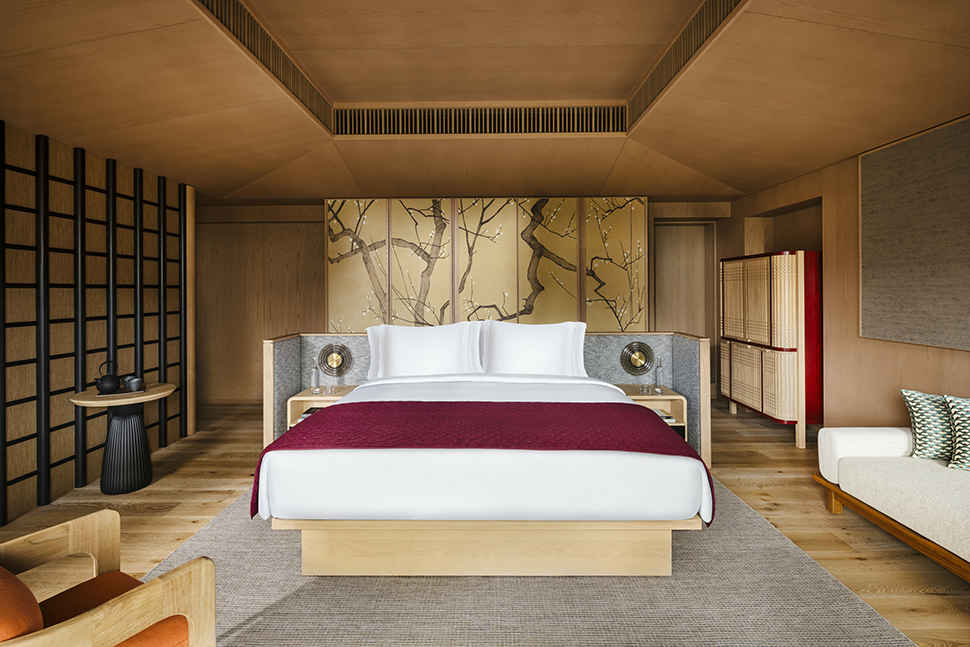
The hotel’s design looks back to the Heian period, from 794 to 1185, when Kyoto served as Japan’s imperial capital and courtly literature and art flourished. Rather than reproducing historic rooms, the interiors draw on the idea of miyabi, an ideal of refinement and elegance associated with that age. References to The Tale of Genji, the eleventh-century literary classic, appear alongside more playful allusions to Japanese folklore. These are cultural cues, not a claim that the building itself dates from the period.
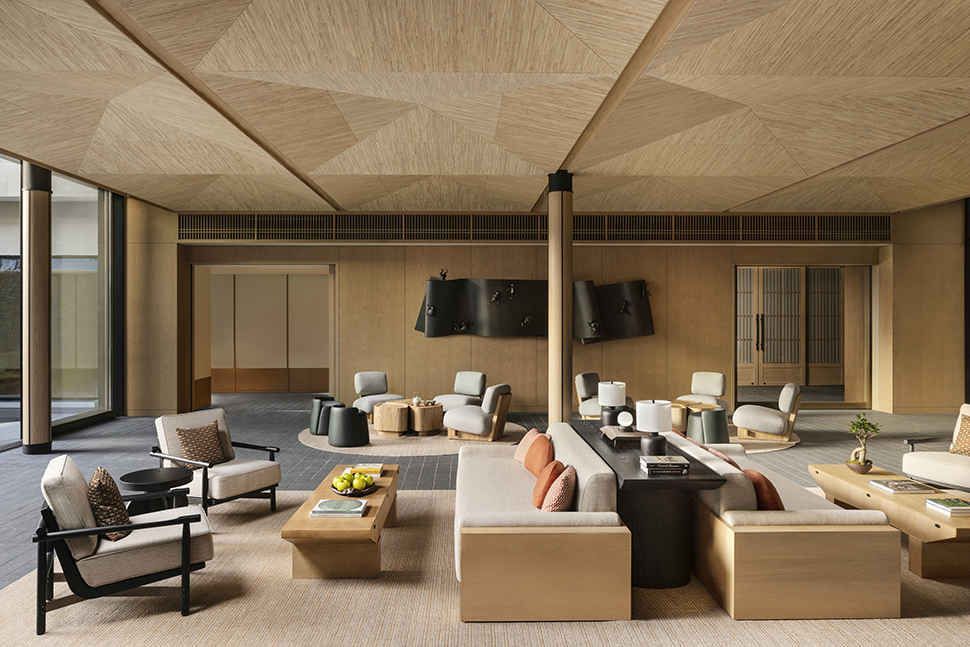
BLINK Design Group developed the interiors, bringing natural materials, earthy tones and uncluttered lines into conversation with Kyoto’s visual traditions. A notable work in the lobby comprises 504 Kyoto-made Raku-style ceramic tiles arranged as a folding screen evoking Mount Kurama. Nearby, a contemporary interpretation of the animal figures associated with the Chōjū-giga scrolls introduces a lighter note. The juxtaposition is revealing: this is a hotel willing to acknowledge that Japanese art has room for humour as well as restraint.
Courtyard planting and garden paths bring a changing landscape into the architecture. That matters in Kyoto, where the experience of a building has long been tied to what can be seen through a doorway, across a veranda or beyond a carefully framed window. At Six Senses, greenery is more than an ornamental flourish. It softens the transition between guest rooms and communal spaces, and gives the urban setting a slower tempo. The result is a contemporary hotel with a sense of place, rather than a themed version of tradition.
Rooms designed for time, not merely for sleep
The 81 accommodations range from approximately 42 to 238 square metres, according to the hotel’s published specifications. Depending on category and position, views take in the internal courtyard, neighbouring gardens or the cityscape. The larger suites offer room for travellers staying longer, while the three-bedroom penthouse is conceived for guests seeking substantial shared space. Those differences are worth considering when booking: in a city where the quality of the view can shape an entire morning, room orientation may matter as much as floor area.
The visual language is intentionally restrained. Wood, natural textures and warm, muted colours leave space for the more particular details of craft and pattern. This is a different expression of luxury from the grand-hotel tradition of polished marble and theatrical chandeliers. The emphasis is on privacy, material quality and a degree of visual quiet. It also reflects a broader shift in high-end hospitality: the most valuable amenity can be the freedom to spend an unhurried hour without being asked to admire anything.
Kyoto rewards early starts, especially around its busiest landmarks. A room that encourages a deliberate return after a morning of walking therefore has practical appeal. Guests can structure the day around a temple visit, a museum exhibition or an exploration of Higashiyama’s lanes, then come back for a swim or an afternoon at the spa. The hotel is not a substitute for discovering the city. Its strongest role is as a counterpoint to the intensity of discovery.
Wellbeing with a distinctly Kyoto frame
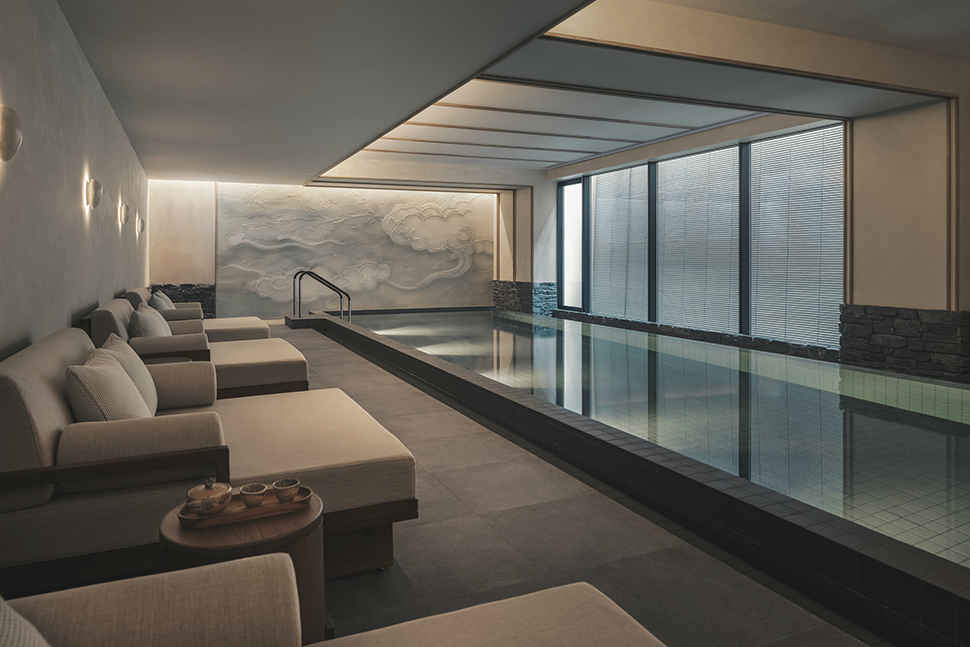
Wellness is central to the Six Senses identity, but in Kyoto it acquires a particular context. The spa combines treatment programmes with facilities influenced by Japanese bathing culture, including traditional bath areas, an indoor pool and a dedicated pool for Watsu, a form of aquatic bodywork. Yoga and meditation sit alongside fitness facilities and technology-led recovery offerings. These services differ in character and purpose, and should not be mistaken for medical treatment or promises of specific health outcomes.
The property’s Wellness Screening programme is designed to help tailor a guest’s experience, while the Biohack Recovery Lounge takes a more contemporary approach to rest and recovery. By contrast, the Alchemy Bar invites participants to work with ingredients and create personal-care products. The appeal is not that every guest must follow a prescribed wellness journey. It is that different ways of slowing down are available, from an uncomplicated swim to a more structured programme.
There is a useful distinction between wellbeing as spectacle and wellbeing as habit. Kyoto’s longstanding practices of bathing, contemplation and attention to seasonal change suggest the latter. The hotel’s interpretation is unmistakably modern and commercially organised, yet its better moments come from recognising that restoration can be modest: quiet, water, a change of pace and the permission to leave a crowded itinerary unfinished.
The calendar arrives at the table
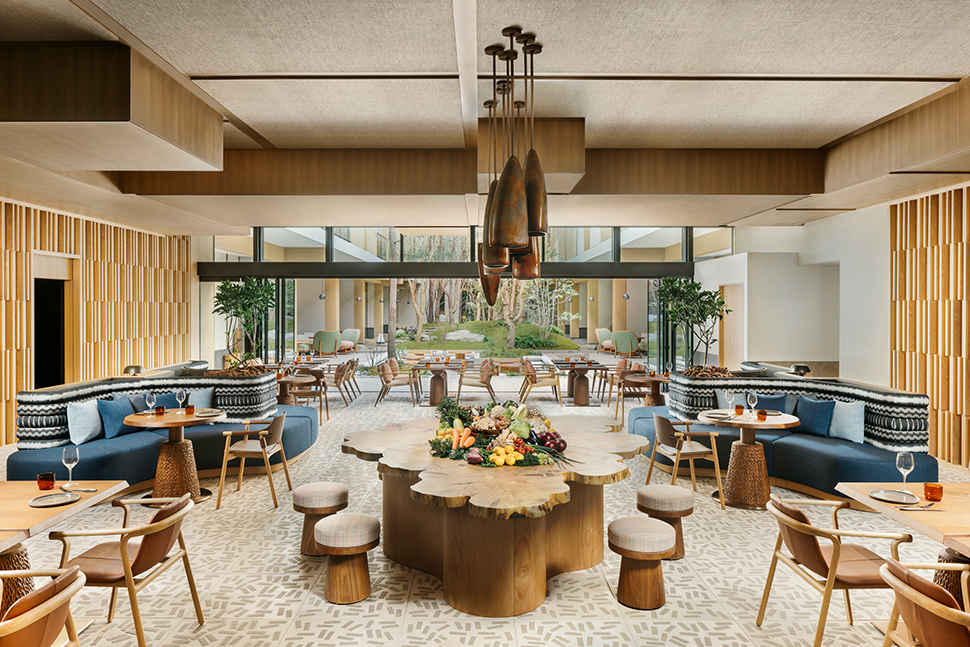
At Sekki, the hotel’s principal restaurant, the kitchen takes inspiration from the 24 solar terms of the traditional Japanese calendar. This is a finer division of the year than the familiar four seasons, reflecting shifts in weather, produce and agricultural life. It gives the restaurant a strong organising idea: the menu is intended to change with the ingredients available rather than remain fixed around a set of signature dishes.
The culinary approach follows the brand’s Eat With Six Senses philosophy, with an emphasis on produce, considered sourcing and a range of plant-forward choices. That does not make the restaurant a conventional kaiseki establishment, nor does it mean that every dish is an untouched expression of historical Japanese cuisine. Its identity is contemporary, informed by local food culture and an interest in fermentation and seasonal vegetables. The distinction matters: Kyoto offers many different ways to eat, and Sekki is one interpretation among them.
Elsewhere in the hotel, Café Sekki offers a more casual pause, while Nine Tails is the cocktail bar, with drinks that make use of local ingredients. The hotel’s current dining information also lists Sushi Oga Higashiyama. Together these venues broaden the choices for a guest spending several nights in residence. Still, a serious visit to Kyoto should include meals beyond the hotel, whether that means a neighbourhood noodle counter, a market snack or a carefully planned restaurant reservation. The city is far too varied to experience from a single dining room.
Sustainability in the details
The language of sustainability is common in luxury travel, sometimes to the point of becoming invisible. At Six Senses Kyoto, there are at least concrete initiatives to examine. The property has an Earth Lab dedicated to educational activities and practical workshops, and its opening announcement described a sustainability fund supported by 0.5 per cent of hotel revenue, intended to assist local organisations working on forestry and conservation. Such commitments are more meaningful when understood as ongoing programmes rather than a guarantee that travel itself has no environmental cost.
The hotel received LEED Silver certification in July 2024 under the hospitality-focused building standard, according to Green Building Japan. Certification does not settle every question about a property’s environmental impact, but it offers a verifiable point of reference beyond promotional language. The architecture’s attention to natural materials and planted spaces also forms part of the guest experience, though aesthetic choices alone should not be confused with measurable environmental performance.
For travellers interested in the relationship between hospitality and local communities, the most valuable question may be what remains after a visit: support for craft skills, engagement with the region’s landscape and an understanding of how Kyoto’s cultural identity is maintained. The Earth Lab and other participatory experiences offer a starting point, provided guests approach them with curiosity rather than as another attraction to tick off.
Higashiyama, on foot
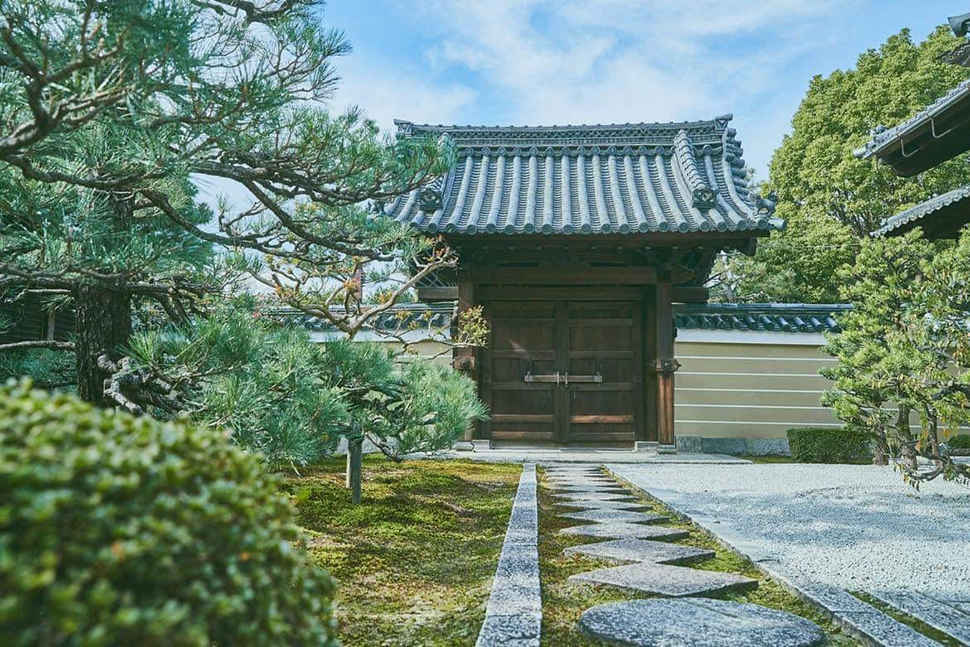
The hotel’s location invites walking. Sanjusangen-do, famous for its long hall and extraordinary assembly of Buddhist figures, lies nearby, as does the Kyoto National Museum. The neighbourhood is not simply a cluster of celebrated sights: between the major monuments are residential streets, small workshops and shops whose pace is very different from the crowded approaches to the best-known temples. It is in these less dramatic stretches that the texture of Kyoto becomes apparent.
Farther through the eastern districts, travellers can explore routes towards Kiyomizu-dera and Gion, allowing time for the narrow streets and changing architecture rather than rushing from one photographic viewpoint to the next. Distances and access should be checked for the particular day’s itinerary; Kyoto is a large city, and its most famous places are not all a short stroll from one another. Public transport and taxis remain useful, especially in summer heat or during busy holiday periods.
The seasonal dimension is impossible to ignore. Cherry blossom attracts visitors in spring, while autumn colour gives the gardens and wooded hills a different character. Yet the city is compelling outside those celebrated windows, when rain changes the look of stone paving or winter light sharpens the outline of a temple roof. A good Kyoto itinerary leaves room for weather, chance discoveries and the possibility of returning to a place twice.
A different idea of luxury
Six Senses Kyoto belongs to a generation of hotels that treats a destination’s cultural life as part of the accommodation rather than a backdrop to it. Its success as an idea rests on a delicate balance. Too much explanation would turn the experience into a lesson; too little would reduce the references to decorative motifs. Here the Heian-inspired design, the seasonal restaurant and the emphasis on wellbeing form a coherent vocabulary, even though each guest will engage with it differently.
This is an address for travellers who value contemporary comfort but do not want to lose sight of the city outside. It may appeal especially to visitors planning several days in Kyoto, with enough time to combine major landmarks, quieter neighbourhoods and periods of genuine rest. Those seeking the rituals of a traditional ryokan will find a different kind of experience elsewhere; Six Senses is a modern urban hotel with its own interpretation of Japanese hospitality.
The best reason to stay is not the promise of escaping Kyoto. It is the possibility of returning to the city with a more attentive eye: noticing how a garden is composed, why a menu changes with the calendar, or how a familiar street feels different in the evening. In a place as layered as Kyoto, that is a persuasive definition of luxury.
Practical Information
Six Senses Kyoto