Music and mineral waters in Matsumoto
In Matsumoto, music is more than an evening diversion. The city in Nagano Prefecture has built a cultural identity around education, mountain landscapes and the performing arts, an association often expressed through three Japanese words pronounced gaku. The surrounding peaks provide the setting, but the city’s appeal is equally apparent in its castle, craft traditions and concert halls. At Asama Onsen, a short drive from the centre, KAI Matsumoto draws these strands together in a ryokan where the experience of listening is treated with almost as much care as bathing.
The property reopened on 4 August 2026 after a comprehensive renovation, emerging with a deliberately unusual proposition. Its operator, Hoshino Resorts, calls the concept Matsumoto Elegante: a contemporary interpretation of the Japanese hot-spring inn in which local wines, Italian cooking and live music complement the region’s longstanding bathing culture. The result is not a rejection of the ryokan, but an exploration of how its traditional rhythms can accommodate a more international sense of pleasure.
This distinction matters. Japan’s great inns have long understood the value of moving slowly through a day, from arrival and a first bath to dinner, conversation and sleep. KAI Matsumoto retains that structure while allowing each element to take on a distinctive local accent. The wine comes from the wider Shinshu region; the music speaks to Matsumoto’s artistic life; and the baths are anchored in the mineral waters of Asama Onsen. It is a destination designed to be experienced as a whole rather than as a list of amenities.
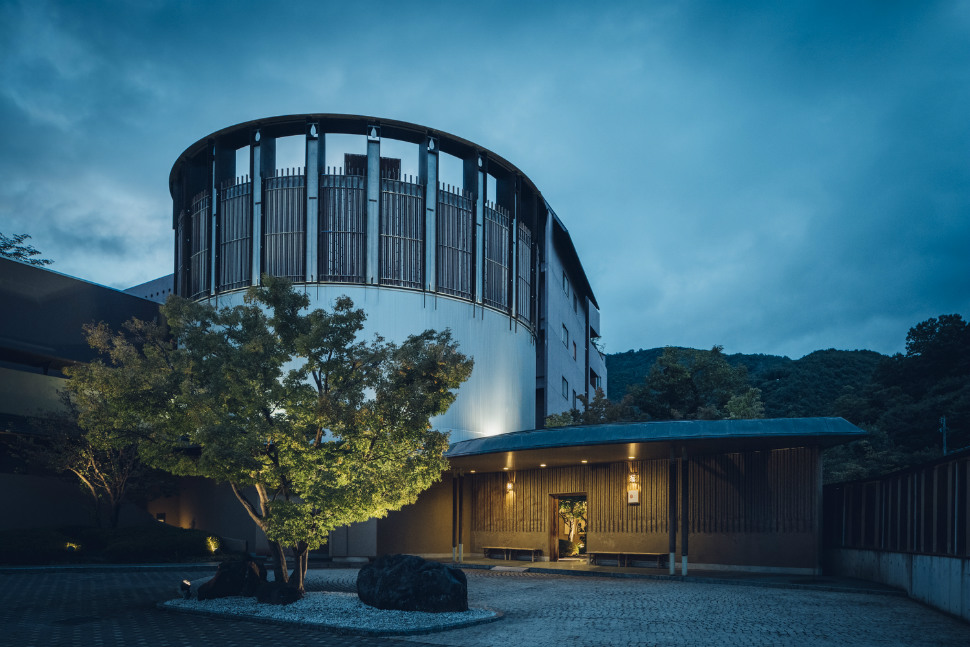
An onsen town with a long memory
Asama Onsen lies on the northeastern side of Matsumoto, approximately fifteen minutes by car from the railway station. Its history is closely linked to the castle town, and Hoshino Resorts describes it as a bathing retreat once associated with the lords of Matsumoto Castle. The setting gives the contemporary hotel a historical framework that would be difficult to reproduce elsewhere. Hot springs here are not an imported wellness trend; they are part of the region’s social and cultural geography.
Matsumoto Castle, with its dark timber exterior and commanding silhouette, is among Japan’s most recognisable historic fortresses. Its surviving main keep is designated a National Treasure. A visit helps explain the relationship between the castle town and the surrounding district, while the nearby streets provide a more intimate introduction to local shops, crafts and everyday life. Nakamachi Street, known for its distinctive storehouse architecture, is especially rewarding for those interested in how the city has preserved its commercial past.
The larger landscape is equally compelling. Nagano is a prefecture of mountain valleys, forests and seasonal contrasts. Travellers who extend their stay can consider Kamikochi, a celebrated highland destination in the Japanese Alps, although access and transport arrangements vary by season. Against this wider geography, KAI Matsumoto functions as both a retreat and a gateway: a place to recover after exploration and to discover a different, more reflective dimension of the region.
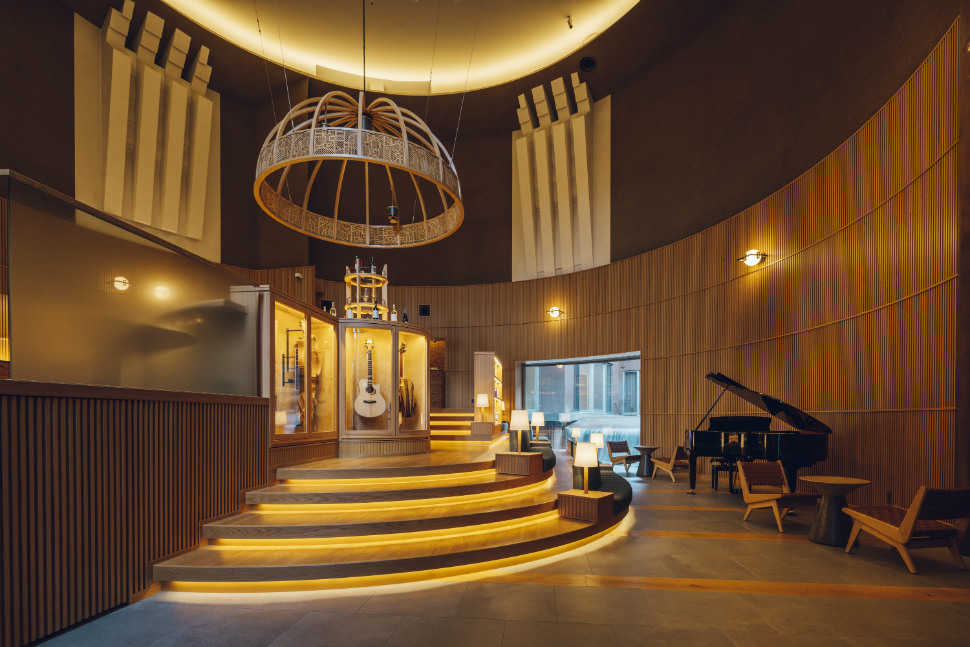
A renovation conceived around sound
The 2026 renovation gives music a role that extends beyond a performance schedule. According to Hoshino Resorts, every guest room has been reimagined as a GAKU no Ma regional room, equipped with a record player and high-fidelity speakers. The intention is to make listening a private ritual. Guests can select records and allow the music to shape the atmosphere of their accommodation rather than relying on the anonymous soundtrack of a conventional hotel.
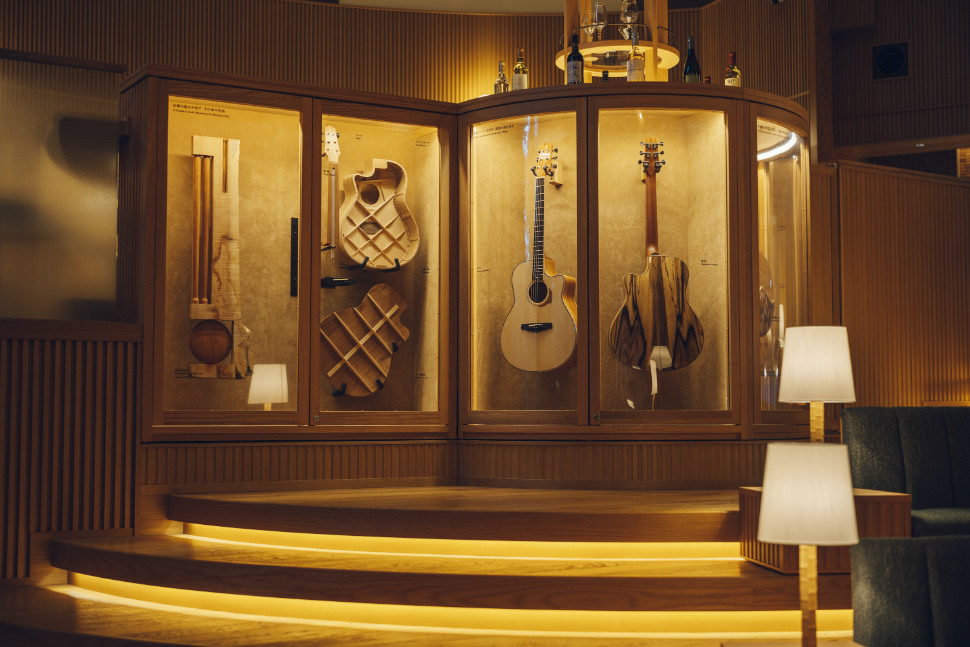
The architectural concept was developed by NOMURA Co., Ltd., with detailed design by S.T. Planning. These credits, published by the operator, are useful because the redesign is central to the hotel’s identity. The shared spaces are conceived not simply as circulation areas but as settings for conversation, music and wine. The renovation also introduces a dedicated wine bar, giving guests a place to linger after dinner without returning immediately to their rooms.
The idea is unusually coherent. A ryokan normally guides guests through a sequence of experiences, with each room serving a clear purpose. Here, the spaces are connected by a musical thread. A concert can be followed by a glass of local wine, then by a recording enjoyed in private. The transition from public performance to personal listening is as important as the performance itself.
The design does not need to imitate a European concert hall to acknowledge the city’s musical identity. What makes the concept persuasive is its relationship with Matsumoto: the city’s long commitment to musical education and performance provides a reason for the hotel to build an entire experience around sound.
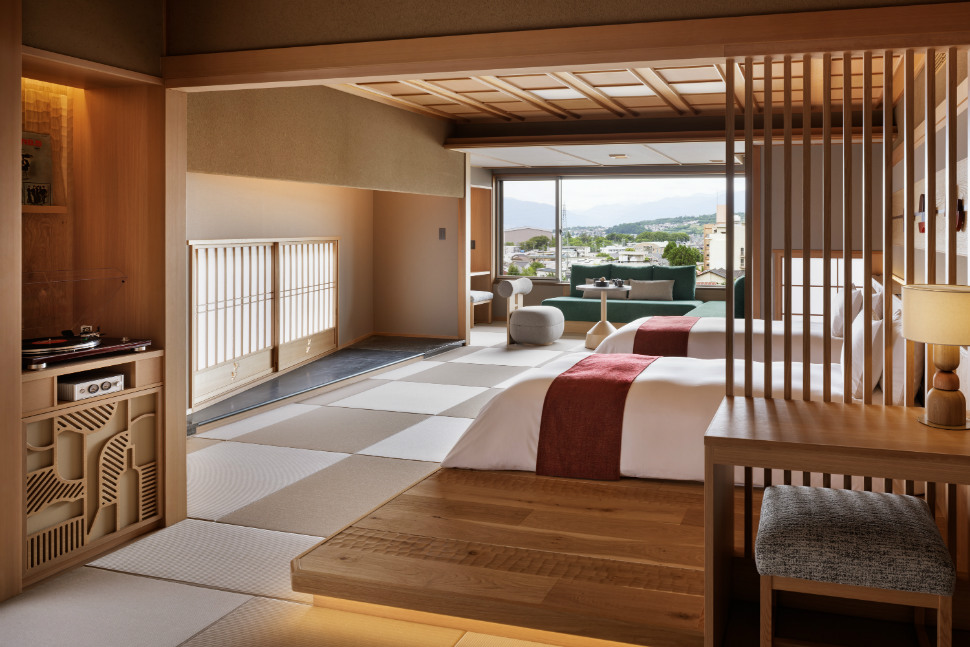
Twenty-nine rooms, each with its own listening ritual
KAI Matsumoto has 29 guest rooms, a relatively intimate scale that supports the sense of retreat. Nineteen have private outdoor baths, according to the operator’s renovation announcement. That distinction is important for prospective guests: a private bath is a feature of selected accommodation, not a universal inclusion across every room. The hotel’s public onsen facilities remain available as a separate part of the experience.
The new GAKU no Ma concept provides a shared identity across the room collection. Premium audio equipment and vinyl records create an alternative to the usual hotel-room entertainment system, inviting guests to give their attention to a complete piece of music. In a world of playlists and interruptions, the physical act of choosing and playing a record has a particular appeal. It encourages a slower relationship with time, which is entirely appropriate to the ryokan tradition.
The furnishings are intended to balance contemporary comfort with regional character. Yet it is the arrangement of the stay, rather than a single decorative motif, that gives these rooms their identity. A guest might return from a bath, choose a record, look out towards the surrounding landscape and allow an hour to pass without any need to fill it. That sense of unclaimed time is a meaningful form of luxury.
Travellers choosing between categories should consult the current room plans and bathing arrangements. The differences between private outdoor bathing, standard room layouts and views may be more consequential than the labels alone suggest. In a property designed around personal rituals, the right room is the one that best supports the way a guest wants to spend the day.
The many ways of taking the waters
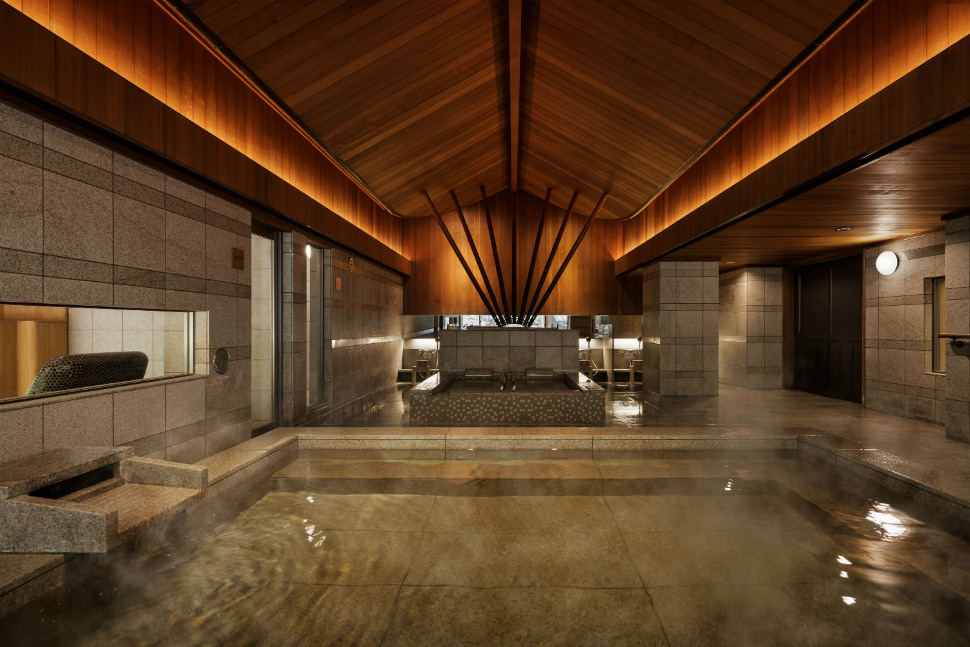
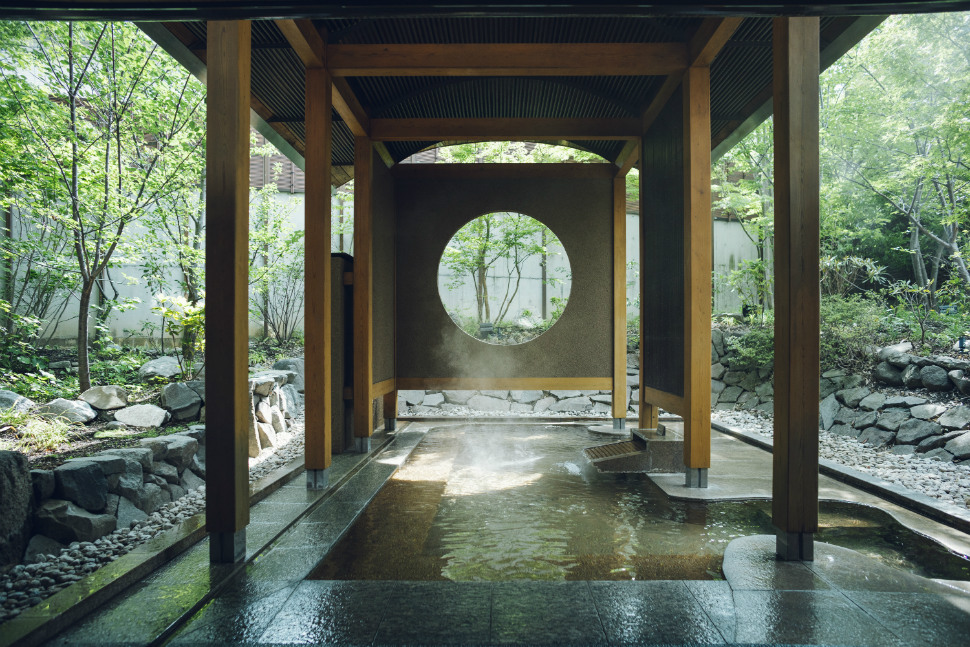
The hot springs remain the foundation of the experience. The renewed property advertises eight types of baths in thirteen variations, together with sauna facilities. Some bathing areas open towards Japanese gardens, allowing the landscape and changing seasons to become part of the ritual. Others provide different temperatures, atmospheres and forms of relaxation. This variety gives guests a reason to return to the bathing spaces at different times rather than regard the onsen as a single activity to complete.
Japanese bathing culture is governed by a set of conventions that may be unfamiliar to first-time visitors. Washing thoroughly before entering the water is essential, and the bathing pools are intended for soaking rather than swimming. Guests should check the property’s current guidance on tattoos, opening hours and any gender-specific arrangements. Respect for these practices is part of appreciating the setting, not a barrier to enjoyment.
The appeal of an onsen is difficult to capture through measurements alone. The temperature of the water, the quiet between conversations and the view towards a garden combine to change the rhythm of the body. At Asama Onsen, that experience is tied to a place with a long bathing history. KAI Matsumoto’s renovated facilities give it contemporary variety without severing the connection to local tradition.
For those staying several nights, the pleasure is cumulative. A bath on arrival feels different from one taken before breakfast or after a day in the mountains. The opportunity to repeat the ritual, without haste, is one of the strongest reasons to choose a ryokan over a conventional city hotel.
Why an Italian dinner makes sense in Nagano
The most surprising element of the reopening may be the dining room. Hoshino Resorts has departed from the Japanese kaiseki format normally associated with its KAI brand and introduced Italian cuisine designed to accompany wines from Shinshu. It is a significant decision, but not an arbitrary one. Nagano has developed a recognised wine culture, with vineyards and producers working in the conditions of a highland region. Italian cooking offers the kitchen a flexible language through which to explore that produce.
The operator presents dinner as a sequence of dishes paired with regional wines, with tableware that makes playful references to music. The precise menu will naturally change, and it would be misleading to describe a particular seasonal dish as a permanent fixture. What can be stated with confidence is the underlying idea: food and wine are not separate amenities, but a central expression of the hotel’s renewed identity.
There is a pleasing contrast between the expected and the unexpected. A guest arrives at a Japanese hot-spring inn and finds the rituals of bathing and quiet accommodation familiar, yet dinner opens onto a different culinary conversation. The experience encourages travellers to reconsider the assumption that local identity must always be expressed through one traditional cuisine. A region can be represented through its ingredients, producers and wines as convincingly as through a fixed set of recipes.
After dinner, the new wine bar extends the evening. It offers a setting for exploring bottles from Shinshu wineries and discussing what has been tasted, while music remains part of the atmosphere. For wine-minded travellers, this is a compelling reason to stay rather than visit the district only for a day.
The concert as an evening ritual
Live music is another defining feature of KAI Matsumoto. The hotel’s official programme describes nightly performances, reflecting the city’s musical heritage. The format gives the evening a natural focal point after dinner or a visit to the baths. Rather than sending guests into town to find entertainment, the ryokan brings a cultural encounter into the stay itself.
Matsumoto’s association with classical music has a substantial public dimension. The city is internationally known for its summer music festival, whose origins are linked to the conductor Seiji Ozawa. Its musical culture is therefore not a marketing invention attached to a hotel. The ryokan draws on an identity that already exists, translating it into an intimate hospitality setting.
There is a difference between music heard in passing and music that asks for attention. A live performance encourages guests to gather, listen and share an experience without the distractions of ordinary travel. The subsequent return to a room equipped for listening creates a thoughtful continuity. Music can be communal and then private; it can animate an evening and also help it come to rest.
Performance details, repertoire and timing should be confirmed for individual dates. The important point is the consistency of the concept. Music is not merely added to the schedule. It connects architecture, accommodation, dining and the hotel’s relationship with the city.
Matsumoto beyond the ryokan
A stay at KAI Matsumoto should leave room for the city itself. Matsumoto Castle is the obvious architectural landmark, but the pleasure of visiting extends to the streets around it, where shops and galleries reveal a long engagement with craft and design. Nakamachi Street and its traditional buildings offer a particularly accessible introduction, while the city’s museums and performance venues add a contemporary cultural dimension.
Nagano’s mountain setting creates opportunities for wider exploration. Kamikochi is a celebrated destination for walking and landscape photography during its accessible season, and the Japanese Alps provide a dramatic contrast to the ordered spaces of the ryokan. Travellers planning mountain excursions should pay close attention to seasonal closures, weather and transport arrangements. A successful itinerary is not simply a list of destinations; it must respect the practical realities of the landscape.
The hotel’s location at Asama Onsen allows visitors to balance these outings with unhurried evenings. There is no obligation to spend every hour outside. Indeed, the renewed concept makes a strong case for leaving at least part of each day unscheduled. An afternoon bath, an early glass of wine or a record played in the room may become as memorable as a major landmark.
The best luxury travel often involves discovering the right balance between activity and stillness. Matsumoto supplies the cultural and natural richness; the ryokan provides a place in which to absorb it.
A contemporary answer to an old Japanese idea
KAI Matsumoto’s renovation is interesting because it does not treat tradition as something that must remain untouched. The ryokan retains the essential pleasures of hot springs, considered hospitality and an intimate relationship with place, while expanding the definition of what a regional stay can include. Italian cuisine, local wine and carefully curated music might appear unlikely companions to the onsen. Here, they are linked by a coherent understanding of Matsumoto.
The scale of the property is part of its appeal. With 29 rooms, it can present a distinctive experience without the anonymity of a large resort. The private bathing options, renewed communal facilities and listening-focused accommodation allow guests to choose between sociability and solitude. Those choices make the hotel suitable not only for visitors already familiar with Japanese ryokan but also for travellers interested in contemporary design and regional gastronomy.
Above all, the reopened KAI Matsumoto suggests that the most compelling form of hospitality is not a collection of imported luxury symbols. It is an experience that could not quite exist in the same way anywhere else. The mountains, the castle town, the wines of Shinshu and the city’s musical traditions all contribute to that sense of specificity. In Asama Onsen, they meet in a place designed for the simple pleasure of staying a little longer.
Practical Information
KAI Matsumoto