An estate between river and forest
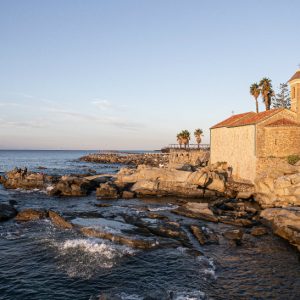
Brittany is often imagined from its outer edge: a granite headland, a harbour, the Atlantic breaking against a seawall. Yet one of the region’s most compelling landscapes lies where the sea moves inland. At Kervignac, near Lorient, the Blavet widens into a tidal estuary, its banks softened by woodland and its surface changing with the light. Above that water stands Domaine de Locguénolé, a country estate whose appeal is inseparable from the meeting of river, forest and history.
The approach establishes a very different mood from that of a beachfront resort. The property sits within more than twenty-five hectares of wooded grounds, with mature trees, gardens and paths leading towards the water. This is not scenery arranged merely to be admired through a window. It is part of the experience, a landscape that invites guests to walk, to notice the tide and to appreciate a quieter side of southern Brittany. The surrounding Morbihan is rich in ports and maritime traditions, but here the coast is encountered obliquely, through the river that connects the interior with the sea.
Locguénolé is a five-star Relais & Châteaux property, operated by Beautiful Life Hotels, and its recent transformation has given a new role to a group of historic buildings. A nineteenth-century château, an eighteenth-century Breton manor, an orangery and a former stable block now accommodate guests in markedly different settings. The architecture is not a single composition. It is an estate assembled over generations, and that variety is precisely what makes the place interesting.
A family house that became a hotel
The history of Locguénolé reaches back more than three centuries. According to the estate’s own account, the manor was built in the early eighteenth century, while the château took shape in the early nineteenth under Count César de La Tour-Maubourg. Its history is closely associated with the De Perrien and De la Sablière families. What visitors see today is therefore not an invented aristocratic setting but the result of successive periods of occupation, adaptation and care.
The property’s modern hospitality story began in 1966, when the family transformed the residence into a hotel. Four years later it joined Relais & Châteaux, establishing a relationship with a collection of independently spirited hotels and restaurants that continues today. The distinction matters in a region where local character is an essential part of the journey. Locguénolé was never conceived as an anonymous international resort; its identity came from a particular house, its grounds and the traditions of the surrounding countryside.
The next major chapter began with an extensive restoration, lasting approximately three years, before the estate reopened in December 2023. The project was not limited to the château. It rethought the relationship between the buildings, expanded the range of accommodation and created new hospitality spaces, while maintaining the estate’s connection with the Blavet. Restoration at this scale is inevitably an act of interpretation. The question is not simply what can be preserved, but how a historic property can continue to feel inhabited rather than staged.
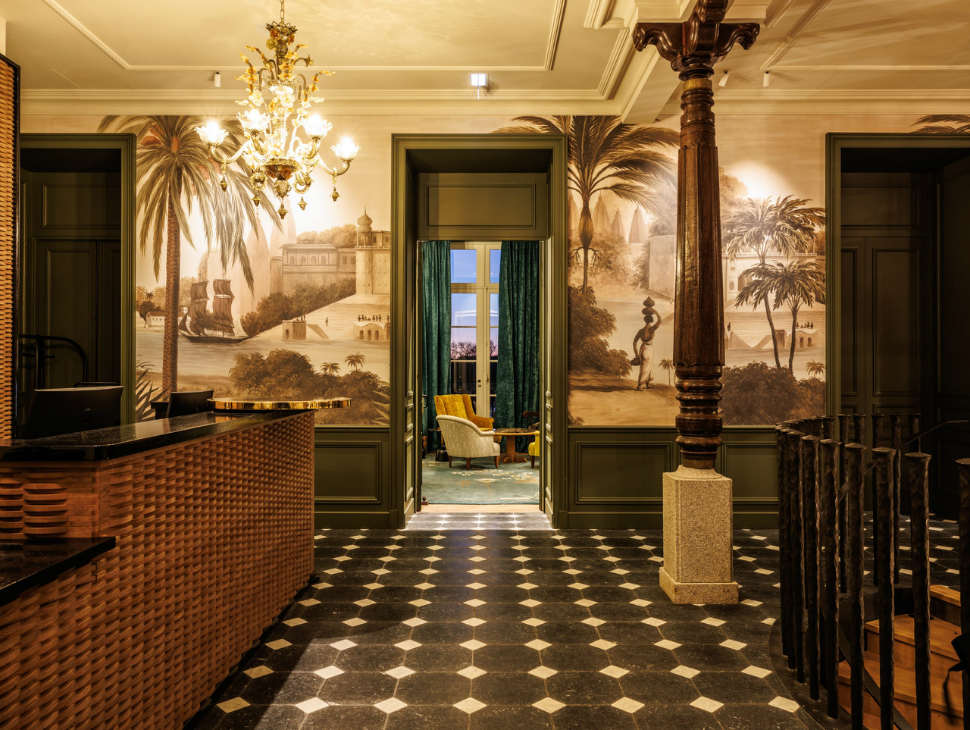
There is also a distinctly maritime idea behind the interiors. Lorient’s history as a port of the French East India Company provides a point of reference for a decorative vocabulary of travel, collected objects and distant horizons. That theme gives the estate a wider imaginative geography without displacing its Breton roots. The most effective moments are those in which the two histories meet: a country house overlooking a tidal river, furnished with reminders that this region has long looked outward across the ocean.
Four buildings, four ways of staying
The hotel’s current website describes 46 rooms and suites distributed across the Château, the Manoir, L’Orangerie and the Club. Its booking partners may classify additional standalone accommodation separately, so the published totals are not always identical. For travellers, the more useful question is which part of the estate best matches the kind of stay they have in mind.
The Château carries the strongest sense of historical occasion. Its architecture and reception rooms establish the tone of a grand country house, while the bedrooms offer a contemporary interpretation of period elegance. The eighteenth-century Manoir is more intimately connected with the Breton vernacular. Stone, timber and views towards the grounds give it a different atmosphere from the château’s formality. The Orangery adds another register, with accommodation linked to the outdoor swimming-pool area. Meanwhile the Club occupies the former stables and brings guests close to the spa.
Interior designer Christophe Bachmann has treated these spaces as individual chapters rather than applying a uniform decorative formula. References to voyages and the East India Company appear in furnishings, colours and objects, but they do not overwhelm the buildings’ original identities. The result is theatrical in places, deliberately comfortable in others. A guest might choose a room for its architectural character, its proximity to wellness facilities or simply the view that opens beyond the windows.
This range is particularly valuable for repeat visits. A weekend in the château need not resemble a later stay in the manor or the Club. The estate offers the possibility of rediscovering the same landscape through a different domestic setting. That flexibility is one of the advantages of a property composed of several buildings, provided guests take the time to understand the distinctions when booking.
The pleasure of an unconventional address
Beyond the principal rooms, Locguénolé has developed three especially unusual places to stay. Suite Coucou reimagines a former poultry house as a private retreat. Le Caprice is a boat-suite, drawing on the maritime imagination that runs through the property. Villa Belém provides a more expansive residential option for travellers who want to share their stay with family or friends. Each has a different relationship with the estate, and each makes a persuasive argument for choosing accommodation according to experience rather than hotel hierarchy.
These are not interchangeable suites. Their layouts, access arrangements and capacity differ, and the hotel’s current descriptions should be consulted before making a reservation. That is particularly important for families, guests with mobility requirements and anyone planning an extended stay. The pleasure of an unconventional room depends on understanding exactly what makes it unconventional.
The idea also reflects a broader evolution in luxury hospitality. Historic estates increasingly offer spaces that feel less like standardised hotel inventory and more like individual places to inhabit. At Locguénolé, that approach is especially convincing because the unusual accommodation is tied to the property’s existing structures and maritime setting. The result is not a collection of decorative novelties, but a way of allowing guests to experience different aspects of the same landscape.
At L’Inattendu, the region is on the plate
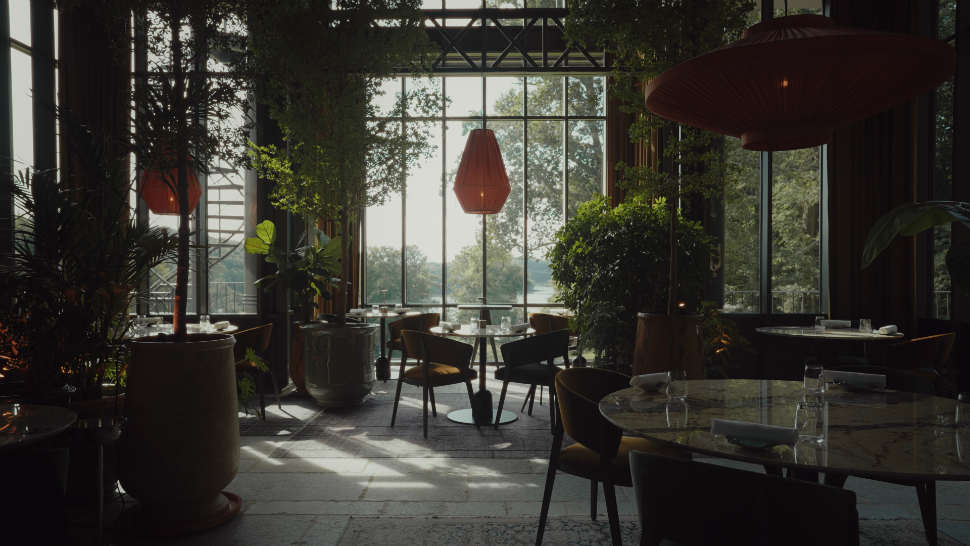
Food is central to the estate’s identity. L’Inattendu, the gastronomic restaurant set beneath a glazed conservatory beside the château, earned a Michelin star in 2025 and retains it in the 2026 selection. Its chef, Yann Maget, was named Meilleur Ouvrier de France in 2023, a distinction that recognises technical mastery within the French culinary tradition. Yet the restaurant’s strongest point of reference is not an abstract idea of haute cuisine. It is Brittany itself.
The Michelin Guide describes a kitchen attentive to local ingredients and confident in its use of the region’s distinctive flavours. Seafood, vegetables and carefully constructed sauces provide the foundation, while touches such as kari gosse, a spice blend associated with the Lorient area, speak to the port’s historic connections with wider trade routes. This is a useful culinary parallel with the interiors: both draw on the encounter between local tradition and a history of travel.
The estate’s kitchen garden, orchard and beehives contribute to the restaurant’s supply, according to the Michelin Guide, alongside the work of regional producers and fishermen. Such details are more revealing than a list of fashionable ingredients. They show how a restaurant can develop a genuine relationship with its immediate environment, even while relying on the wider network of growers and craftspeople essential to serious cooking.
The setting has its own sense of occasion. The glass-roofed dining room, filled with greenery, introduces an almost conservatory-like atmosphere to the formal pleasures of a gastronomic meal. The combination is particularly appealing at a country estate, where dinner should feel connected to the gardens and the changing seasons outside. Specific dishes naturally evolve with the menu; the enduring proposition is the chef’s precision and his willingness to let Breton products lead the conversation.
A bistro, a small bar and the art of lingering
A second restaurant, Maison Alyette, occupies the garden level of the château. Its terrace looks across the grounds towards the water, and its cooking is presented as a more relaxed expression of regional tradition. The contrast with L’Inattendu is welcome. A multi-day stay rarely calls for a tasting-menu experience every evening. Sometimes the greater pleasure is a generous, familiar dish enjoyed without ceremony, with the landscape providing the occasion.
The bar, L’Apparat, offers yet another mood. The estate describes it as an intimate space for cocktails, spirits and teas, its interior deliberately evocative of travel. It opens towards a château balcony overlooking the estuary. The location is significant: here, even an aperitif is shaped by the river below, the trees around it and the light that changes as evening approaches.
Together these three spaces give the property a rhythm. A long lunch can lead to an afternoon walk; a drink before dinner can become an opportunity to watch the tide; a formal meal can be reserved for a particular evening rather than imposed as the only expression of luxury. This freedom to alternate between different registers of hospitality is one of the reasons the estate works as a destination in its own right.
Macha Spa and the former stables
The transformation of the old stable block into the Club and Macha Spa is among the estate’s most interesting examples of adaptive reuse. The spa takes its name from Macha, a figure of Celtic mythology associated with horses, making an explicit connection with the building’s former purpose. The theme is not merely visual. It links the experience of restoration to a local cultural vocabulary and to the memory of the estate’s working life.
The spa offers six treatment rooms, including two double cabins and a larger spa suite, according to the hotel. Its treatments are associated with Sothys, the French skincare house. Indoor and outdoor swimming facilities add to the wellness offer, although access arrangements, seasonal opening and treatment availability should be checked at the time of booking. The estate also offers other outdoor leisure facilities, including tennis, and a setting particularly suited to walking.
What makes the wellness proposition distinctive is the landscape beyond the treatment rooms. A spa visit here need not be isolated from the rest of the stay. It can follow a walk beneath the trees, a quiet hour beside the pool or a morning spent exploring the riverbank. The most persuasive kind of restoration often comes from that combination of movement and stillness rather than from an elaborate timetable of treatments.
The former stables also demonstrate how the estate’s buildings can find new functions without losing all connection with their past. Their history becomes part of the guest experience, not a separate exhibit. That continuity is especially important in a property whose appeal depends so much on its accumulated character.
The Blavet and the other side of Brittany
Locguénolé’s position near Lorient makes it a useful base for exploring southern Brittany, but it also encourages travellers to remain close to the estate. The Blavet is a tidal waterway, and its changing level alters the appearance of the banks and the light on the water. A private pontoon links the property to this maritime environment. It is a reminder that the river is not merely a scenic feature; it is part of the region’s working geography and its long relationship with the Atlantic.
Lorient itself offers a different chapter of that story, from its historic trading role to the contemporary maritime culture of the harbour. The nearby coast presents fishing ports, beaches and the distinctive landscape of the Morbihan. Yet a stay need not become a race between attractions. The grounds provide opportunities for walking and quiet observation, and the view across the water can be as rewarding as a day spent driving between destinations.
The estate’s history also suggests a more nuanced way of thinking about Breton identity. The region is rightly celebrated for its traditions, but it has always been connected to travel, trade and exchange. At Locguénolé, the references to the East India Company are most convincing when understood in that context: not as an exotic decorative fantasy, but as a reminder of the wider world that helped shape Lorient and the surrounding coastline.
For visitors accustomed to the familiar images of Brittany, this is an invitation to look inland without leaving the sea behind. The estuary is a place of transitions, between fresh water and salt, woodland and shore, stillness and movement. The hotel’s architecture and hospitality make those transitions easy to appreciate.
A new chapter for an established house
The renovation completed in 2023 has returned Domaine de Locguénolé to the conversation about France’s most interesting country hotels. Its recognition in the 2026 Michelin Key selection adds a contemporary distinction to a property already rooted in the Relais & Châteaux tradition. Such awards are useful markers, but they are not the essence of the experience. What matters more is whether the estate still feels connected to the place from which it grew.
Here, the answer lies in a series of relationships: the château and manor with their different histories; the former stables and their new purpose; the gastronomic restaurant and the products of Brittany; the gardens and the tidal Blavet. Each would be attractive in isolation. Together, they form a more compelling proposition, one that rewards a stay of several days rather than a hurried overnight visit.
The property is particularly suited to travellers who appreciate architectural character without wanting to sacrifice modern comfort, and to those who see gastronomy as a way of understanding a region. It also appeals to visitors seeking a quieter version of luxury, defined less by spectacle than by time, space and the possibility of choosing how each day unfolds.
The lasting impression of Locguénolé is likely to come from a moment between planned activities: the view through a château window, a walk under the trees, the surface of the estuary shifting with the tide. Those details are difficult to package, which is precisely why they matter. They give this restored Breton estate something no new hotel can manufacture overnight: a genuine sense of belonging.
Hotel Information
Domaine de Locguénolé & Spa
Le Hingair, Route de Port-Louis, 56700 Kervignac, Brittany, France.
Official website: Domaine de Locguénolé
Tags: Brittany, Domaine de Locguénolé, French Gastronomy, luxury hotels, Relais & Châteaux, Wellness