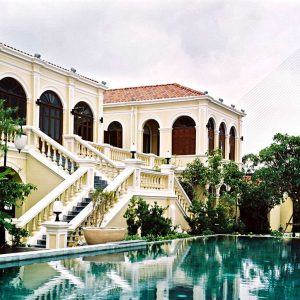
In Bangkok’s historic Dusit district, an extraordinary riverside retreat brings together Art Deco design, Thai antiques and the pleasure of travelling at a slower pace.
Bangkok rewards curiosity, but it rarely asks visitors to slow down. Its avenues, markets, galleries and waterways invite a succession of discoveries, each one apparently more urgent than the last. The Siam proposes a different rhythm. Set on a landscaped stretch of the Chao Phraya in the historic Dusit district, this privately owned hotel offers the feeling of entering a carefully imagined residence rather than a conventional urban resort.
The distinction is visible in its combination of generous space, greenery, art and architecture. The hotel’s original concept brought together the Sukosol family’s interest in collecting with the theatrical design sensibility associated with Bill Bensley. The result is neither a straightforward recreation of old Siam nor a minimalist contemporary hideaway. It is a deliberately layered place in which the history of objects, the proportions of rooms and the surrounding river all contribute to the experience.
A sanctuary in the royal district
Dusit occupies a distinctive place in Bangkok’s urban geography. Its royal associations, civic buildings, green spaces and cultural landmarks give it a different atmosphere from the commercial centres farther south and east. The Siam sits along the river in this historic context, offering guests a base from which to explore a quieter side of the capital while remaining connected to its wider attractions.
The property describes approximately three acres of riverside gardens. That sense of space is central to its appeal. In a city where hotel developments often emphasise height, The Siam chooses a low-rise arrangement and a sequence of courtyards, corridors and planted spaces. Moving through the hotel can feel like discovering a collection of connected rooms, each with its own mood, rather than passing through a single grand lobby on the way to an anonymous lift.
The river is a constant presence without dominating every moment. Guests can use the hotel as a retreat, yet the Chao Phraya also offers a route into the city. The private boat service is part of the property’s character, although current schedules and departure points should always be confirmed. It allows the journey itself to become an extension of the hotel’s atmosphere.
An Art Deco imagination, distinctly Thai
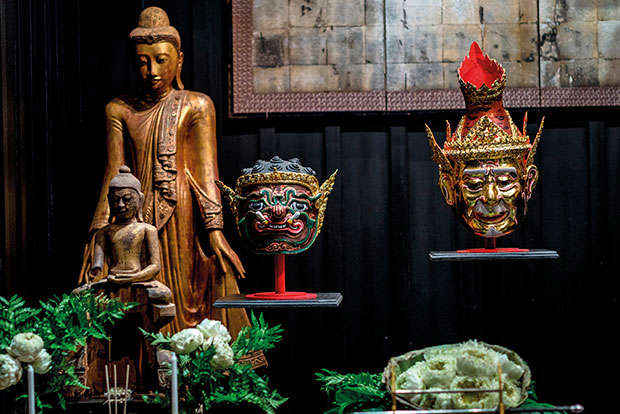
The Siam’s design is frequently described as Art Deco-inspired, but that description only begins to explain it. Geometric forms and carefully controlled lines meet tropical planting, Thai decorative traditions and a collection of original artworks and antiques. Rather than arranging everything into a single historical period, the interiors invite a conversation between different eras and influences.
Bill Bensley’s involvement is a defining part of the hotel’s story. The property’s own documentation presents the design as part hotel, part resort and part museum. That last word is suggestive, although the experience is not meant to be a solemn one. The collection gives the interiors texture and a sense of personal taste, while contemporary comfort keeps the property firmly in the present.
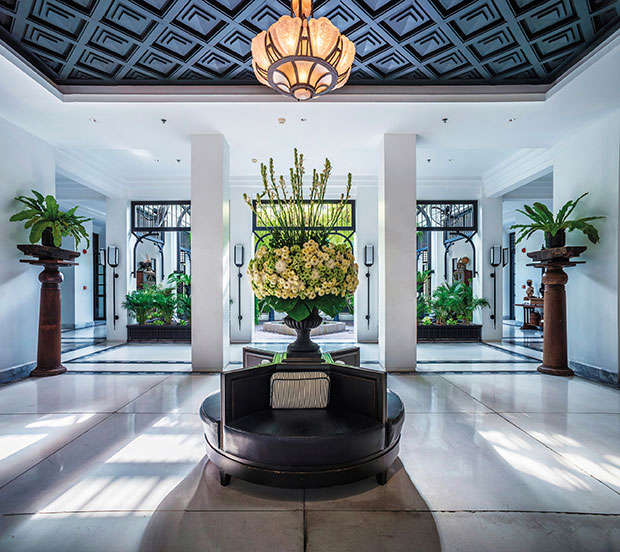
The effect depends on looking closely. A decorative object can be more memorable than a grand architectural gesture; a framed work or a carefully chosen piece of furniture can prompt questions about provenance and cultural exchange. This is a hotel that rewards guests who enjoy design as a form of storytelling, not merely as an attractive background for photographs.
The pleasure of space
The hotel’s current accommodation pages describe substantial suites and private pool villas. Standard suites are listed at around 80 square metres, while certain larger categories extend to 100 square metres and pool villas to approximately 130 square metres. These figures are useful because they convey the scale of the experience more accurately than an unqualified promise of spaciousness.
The original Références CHR roundup recorded the hotel’s mix of suites, villas and an independent historic cottage. The hotel’s own more recent material describes its accommodation somewhat differently, so travellers should rely on the current booking categories rather than treating archival totals as permanent. What remains consistent is the emphasis on generous proportions and individual character.
In the suites, the combination of antiques, carefully selected art and contemporary amenities creates an atmosphere that is residential without feeling casual. The pool villas add a more secluded dimension, suited to travellers who value privacy as much as access to the city. It is worth choosing a category with an understanding of how much time will actually be spent at the hotel: the pleasure of a private courtyard or pool is greatest when the itinerary leaves room to enjoy it.
Connie’s Cottage and the idea of a living collection
Among the property’s distinctive elements is Connie’s Cottage, a historic Thai house associated with the hotel’s accommodation offering. Its presence reinforces the idea that The Siam is not simply a design project built around a theme. It incorporates a separate architectural story into the broader setting, creating another point of connection with the city’s past.
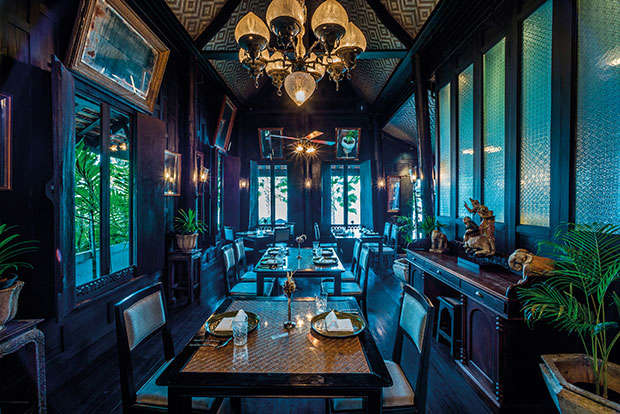
The collection of art and antiques contributes to this sense of continuity. In many luxury hotels, decorative objects are selected primarily for visual consistency. Here the accumulated character of the collection is part of the reason to visit. The interiors suggest a collector’s curiosity, with objects that resist the polished anonymity of a global design formula.
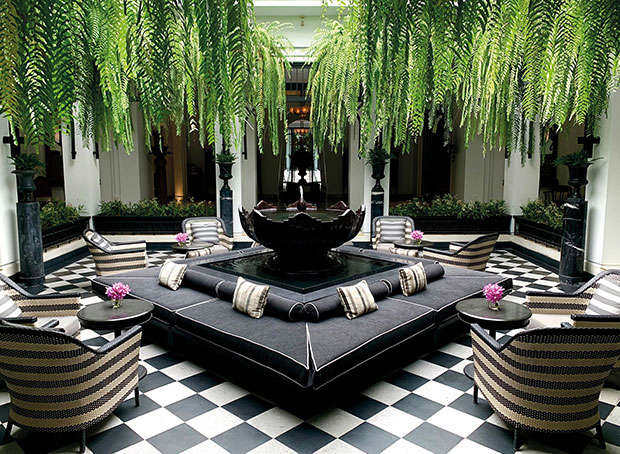
That individuality is also why the hotel is best approached with a little time. Its appeal is not exhausted by the first photograph of the atrium or a single view of the river. A longer stay allows guests to notice changes in light, discover quieter corners and appreciate how the different spaces relate to one another.
Dining as part of the journey
The Siam’s dining spaces are conceived as different experiences rather than a single all-purpose restaurant. The hotel and its collection partners identify Chon Thai, The Story House, The Pier and Bathers Bar among the dining and social venues. Each contributes to the property’s atmosphere, from a more considered meal to a relaxed interval beside the water.
For a traveller, the important point is not the sheer number of outlets but the way food becomes part of the place. Thai cuisine carries regional histories, local ingredients and a remarkable range of techniques. In a setting where art and cultural heritage already matter, dining offers another way to encounter the destination without pretending that a hotel restaurant can represent all of Bangkok’s culinary life.
Menus, chefs and opening arrangements may change, and they deserve to be checked at the time of booking. The editorial value lies in the hotel’s overall approach: a collection of spaces intended for different moments of the day, in which the architecture and gardens are part of the experience.
Wellbeing without leaving the city
Opium Spa is one of the property’s signature wellness spaces. The hotel describes treatments and programmes that include massage, yoga and meditation, complementing the wider idea of a riverside sanctuary. The most persuasive aspect of wellness here may be the setting itself: the possibility of exchanging Bangkok’s traffic and appointments for a few hours of deliberate quiet.
The hotel also offers facilities that support an unhurried stay, including a pool and fitness amenities. These are contemporary expectations of luxury hospitality, yet they feel different when integrated into a small, carefully landscaped property. Rather than occupying a separate tower floor, they belong to the same sequence of gardens and interior spaces.
For visitors who intend to spend every day sightseeing, it can be tempting to treat the hotel as a place to sleep between excursions. The Siam invites the opposite approach. Reserving a morning or an afternoon simply to enjoy the property is not a failure to explore Bangkok; it is part of the reason for choosing this particular address.
A Bangkok itinerary with room to breathe
The Siam’s position in Dusit makes it especially appealing to travellers interested in the city’s cultural geography. Historic landmarks, museums and river connections provide a starting point for discovering Bangkok beyond its most familiar commercial districts. At the same time, the location requires realistic planning: distances across the capital can be considerable, and river transport does not operate according to the same logic as road travel.
A balanced itinerary might combine one day exploring historic Bangkok, another devoted to contemporary art or shopping, and a quieter day built around the hotel itself. The exact programme will depend on individual interests, but the broader principle is useful. The Siam is most rewarding when the traveller allows its setting to shape the pace of the visit.
The river can be an especially compelling thread through the journey. From the boat, Bangkok appears as a series of changing waterfronts rather than a single continuous skyline. The movement between neighbourhoods gives context to the hotel’s location and helps explain why the Chao Phraya remains such a powerful element of the capital’s identity.
Who should choose The Siam?
This is not necessarily the obvious hotel for someone whose main priority is to be within a few steps of a major shopping complex or to minimise every transfer. It is a stronger choice for travellers who value privacy, design, cultural context and a sense of retreat. The difference is important: a good luxury recommendation should identify the right audience rather than claim that one hotel suits everyone.
Couples may be drawn to the villas and the quieter atmosphere; design enthusiasts to the art and architectural composition; repeat visitors to Bangkok to the opportunity to experience the capital from a less familiar district. For a special occasion, the generous accommodation and the sense of seclusion can be particularly attractive. All of these possibilities follow from the property’s verified character rather than from invented accounts of personal visits.
The hotel also demonstrates a broader truth about contemporary luxury travel. The most distinctive places are not always those with the most dramatic skyline or the largest number of facilities. Sometimes it is the clarity of an idea, carried through in architecture, service and setting, that makes an address memorable.
A hotel worth travelling for
The Siam’s achievement is to make a stay in one of Asia’s busiest capitals feel personal and contemplative. Its gardens, low-rise architecture, Art Deco references and collection of Thai antiques combine into a coherent experience that could not easily be transferred to another city. Bangkok is not incidental to the design; it is the source of the hotel’s identity.
The property deserves attention because it offers a genuine alternative within the city’s luxury landscape. It is neither a traditional grand hotel in the European mould nor a conventional high-rise resort. It is a collector’s vision of hospitality, realised on a rare stretch of riverfront and intended to be explored slowly.
For current suite and villa categories, dining arrangements, spa appointments and boat transfers, consult The Siam’s official website. This feature draws on the original Références CHR archive and the hotel’s contemporary documentation, with changing operational details left to the current source.
Hotel Information
The Siam
3/2 Thanon Khao, Vachirapayabal, Dusit
Bangkok 10300
Thailand
Telephone: +66 2 206 6999
Website:
The Siam — Official Website